
Geotomini
Genus Guides
7- Cyrtomenus(burrowing bugs)
- Dallasiellus(burrowing bugs)
- Melanaethus
- Microporus
- Pangaeus(burrower bugs)
- Rhytidoporus
- Tominotus(burrowing bugs)
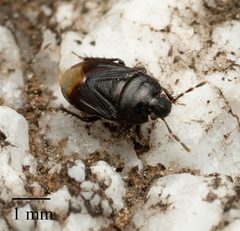
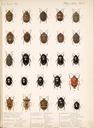
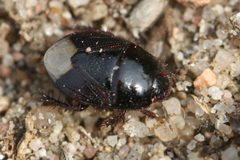
Geotomini is a tribe of burrower bugs within the Cydninae. Members are ground-dwelling heteropterans with documented maternal care , including seed-carrying by females to provision nymphs. The tribe has been studied primarily through the Melanaethus crenatus, with limited tribe-wide behavioral characterization.
Pronunciation
How to pronounce Geotomini: //dʒiːˈɒtəˌmaɪni//
These audio files are automatically generated. While they are not always 100% accurate, they are a good starting point.
Identification
Geotomini are distinguished from other Cydninae tribes by genitalic and structural features, though specific diagnostic characters require examination. As burrower bugs, they possess (digging) adaptations including stout, spiny legs. Accurate identification to tribe level typically requires dissection and reference to taxonomic keys.
Images
Diet
Seeds. Documented in Melanaethus crenatus, where both nymphs and feed on seeds.
Life Cycle
stages (nymphs) have been described. Females exhibit maternal provisioning , transporting seeds to nymphs.
Behavior
Females have been observed carrying seeds to provision nymphs, representing documented maternal care. Oviposition has been described in at least one .
Similar Taxa
More Details
Data limitations
Most documented derive from a single , Melanaethus crenatus. Tribe-level generalizations for , distribution, and broader ecological patterns are not supported by available sources.