
Cydninae
burrower bugs, burrowing bugs
Tribe Guides
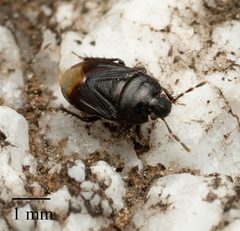
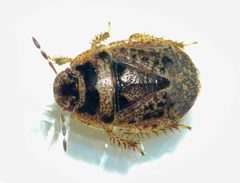
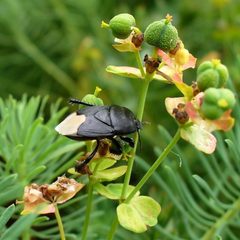
2Cydninae is the largest and most diverse of burrower bugs ( Cydnidae), comprising approximately 11 and at least 40 described worldwide. Members are characterized by their subterranean lifestyle and burrowing adaptations. The subfamily includes two recognized tribes, Cydnini and Geotomini. Several species are considered agricultural pests due to their feeding habits on crop plants and seeds.
Pronunciation
How to pronounce Cydninae: /sɪdˈnaɪniː/
These audio files are automatically generated. While they are not always 100% accurate, they are a good starting point.
Identification
Cydninae can be distinguished from other Cydnidae by their burrowing , though specific diagnostic characters vary by tribe. Members of the tribe Geotomini and certain in Cydnini (such as Cyrtomenus and Prolobodes in the Neotropics) possess a strongly flattened tibia—a unique feature among Neotropical Cydninae.
Images
Habitat
Subterranean and soil-associated environments; specific associations include coastal sandy vegetation (Restinga) in Brazil and fig (Ficus spp.) associations in Mexico.
Distribution
Worldwide distribution with significant diversity in the Neotropical region; documented from Brazil (47 ), Mexico, and Rio Grande do Sul state.
Host Associations
- Ficus spp. - associated withPangaeus serripes found associated with figs in Mexico
Life Cycle
stage followed by five nymphal instars before adulthood; stages described for Pangaeus serripes and Melanaethus crenatus.
Behavior
Burrowing and subterranean lifestyle; seed-carrying documented in Melanaethus crenatus; oviposition behavior described for some .
Human Relevance
At least two of Cyrtomenus are considered crop pests due to their feeding habits; several species have agricultural significance in Brazil and other regions.
Similar Taxa
- Other Cydnidae subfamiliesCydninae is distinguished as the largest and most diverse ; other subfamilies lack the specific tribal and generic characteristics such as the flattened tibia found in Neotropical Cydninae.
Sources and further reading
- BugGuide
- Wikipedia
- iNaturalist taxon
- NCBI Taxonomy
- Review and phylogeny of Cyrtomenus Amyot & Serville (Hemiptera: Cydnidae: Cydninae) based on morphological characters
- Cydninae (Hemiptera, Heteroptera, Cydnidae) in Brazil: updated checklist, new records, and description of Tominotus ondulatus sp. nov.
- Immature stages ofPangaeus(Pangaeus)serripes(Westwood) (Hemiptera-Heteroptera: Cydnidae: Cydninae), associated with figs in Mexico
- Description of Immature Stages ofMelanaethus crenatus(Hemiptera: Heteroptera: Cydnidae: Cydninae: Geotomini), with Notes on Oviposition, Seed-Carrying and Feeding Behaviors