
Jalysus
Stål, 1862
stilt bugs
Species Guides
3- Jalysus reductus
- Jalysus spinosus(spined stilt bug)
- Jalysus wickhami(Spined Stilt Bug)
Jalysus is a of stilt bugs in the Berytidae, comprising approximately 12 described . These insects are characterized by their exceptionally long, slender legs and . Species within this genus exhibit diverse feeding habits, ranging from herbivores to omnivores that consume both plant material and small prey. Some species are significant agricultural pests, particularly of tomatoes, while others serve as agents by preying on pest and soft-bodied insects.


Pronunciation
How to pronounce Jalysus: /ˈdʒælɪsəs/
These audio files are automatically generated. While they are not always 100% accurate, they are a good starting point.
Identification
Distinguished from other Berytidae by combination of body proportions, antennal length, and leg structure. Jalysus wickhami and J. spinosus are the most commonly encountered in North America; J. wickhami is a feeder on glandular-hairy plants across many , while J. spinosus is primarily associated with grasses in the genus Panicum. Identification to species requires examination of genitalia and other subtle morphological features; keys to and fifth instars are available in taxonomic literature.
Images
Appearance
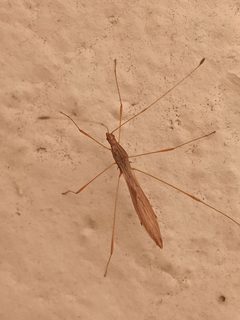
Small, slender true bugs with disproportionately long, stilt-like legs and extremely long, multi-segmented . Body typically elongated and narrow. Coloration varies by but often includes brown, tan, or gray tones. Some species bear small spines on the body. The is relatively small with a visible piercing-sucking beak (rostrum) folded beneath.
Habitat
Primarily associated with herbaceous vegetation, especially plants bearing glandular or sticky trichomes. Found in agricultural fields, gardens, meadows, and natural grasslands. Specific varies by : J. wickhami occurs on diverse flowering plants and crops, while J. spinosus is tied to grass-dominated habitats.
Distribution
Widespread in the Nearctic region, with documented across North America. Jalysus wickhami ranges broadly across the United States and into southern Canada. J. spinosus occurs in eastern and central North America. The extends into the Neotropical region; J. sobrinus has been recorded from South America including Uruguay.
Seasonality
Activity patterns vary by and latitude. In temperate regions, and nymphs are present during the growing season, typically from late spring through early autumn. peak in mid to late summer when plants are in reproductive stages. stage varies; some species likely overwinter as adults.
Diet
, combining plant feeding with . Plant feeding involves piercing stems, flowers, and fruits to extract contents, particularly targeting glandular-hairy plants. Animal prey includes of lepidopterans such as Manduca sexta, soft-bodied insects including aphids (Myzus nicotianae), and prepupal/pupal stages of such as Cotesia congregata. Dietary breadth varies dramatically: J. wickhami feeds on plants in at least 17 , while J. spinosus is more specialized on grasses.
Host Associations
- Madia elegans - Sticky tarweed plant; Jalysus wickhami navigates sticky surface to prey on herbivores and utilize trapped insect carrion
- Nicotiana tabacum - Tobacco; J. wickhami and J. spinosus both occur on this crop, feeding on plant tissue and
- Solanum lycopersicum - Tomato; J. wickhami is a documented pest causing flower and stem damage, fruit distortion
- Panicum - Grasses; primary for J. spinosus
Life Cycle
Hemimetabolous development with and five nymphal instars preceding adulthood. Eggs are inserted into plant tissue or deposited on vegetation. Nymphs resemble but lack fully developed wings and reproductive structures. Developmental rate and survival depend on food availability and quality. Multiple per year likely in warmer climates.
Behavior
Slow, deliberate movement across vegetation using long legs to navigate complex plant surfaces including sticky or hairy leaves. Capable of navigating glandular-hairy plants that trap other insects. activity influenced by age, starvation status, plant presence, and . observed, including application of fluid from beak to legs using middle and hind legs. Mating pairs remain in copula for extended periods.
Ecological Role
Functions as both herbivore and , creating complex trophic interactions. As predators, they contribute to of agricultural pests including hornworms and aphids. However, they also engage in intraguild , consuming beneficial such as Cotesia congregata. Their presence on sticky plants enhances indirect plant defense by consuming or attracting other predators to trapped insect carrion. increases on plants with supplemental carrion can reduce herbivory and increase plant .
Human Relevance
Economic impact is mixed and -dependent. Jalysus wickhami is a significant pest of tomato production, causing flower abortion, stem dieback, and fruit distortion that renders produce unmarketable. Damage occurs in both field and greenhouse settings. Conversely, J. spinosus and J. wickhami have been evaluated and intentionally released as agents in tobacco fields to suppress . Their diet complicates management decisions, as they simultaneously harm and help crop production.
Similar Taxa
- Hoplinus echinatusAnother stilt bug in Berytidae; co-occurs on tarweed and similar , distinguished by body proportions and spination patterns
- Neoneides muticusStilt bug in same ; similar long-legged but differs in antennal segment proportions and genitalia
- Berytinus minorSmaller stilt bug in related ; shorter relative leg length and different preferences
More Details
Taxonomic History
The was established by Stål in 1862. -level has been clarified in recent decades, with J. spinosus and J. wickhami historically confused. A 1981 revision by Wheeler and Henry provided keys and diagnostic features for these common species.
Research Significance
Jalysus have been model organisms for studying omnivory in insects, intraguild , and the ecological consequences of plant-provided food resources. The 'tourist trap' research on tarweed systems highlighted their role in mediating plant--herbivore interactions.
Sources and further reading
- BugGuide
- Wikipedia
- iNaturalist taxon
- NCBI Taxonomy
- Catalogue of Life
- Bring on the Tourists! | Bug Squad
- Small, strange bugs with very long legs: Stilt bugs, Berytidae — Bug of the Week
- Biology of Jalysus spinosus,1 an Insect Predator Found on Tobacco2,3
- THE LIFE HISTORY OF JALYSUS SPINOSUS (SAY). (NEIDIDAE, HETEROPTERA)
- Jalysus spinosus : 1 Effect of Age, Starvation, Host Plant, and Photoperiod on Flight Activity 23
- Effects of diet on longevity and fecundity of the spined stilt bug, Jalysus wickhami
- Jalysus spinosus: Spring Biology and Factors That Influence Occurrence of the Predator on Tobacco in North Carolina
- When good bugs go bad: intraguild predation by Jalysus wickhami on the parasitoid, Cotesia congregata
- Jalysus spinosus and J. wickhami1: Taxonomic Clarification, Review of Host Plants and Distribution, and Keys to Adults and 5th Instars
- Bad but not so bad: Jalysus sobrinus Stål, 1862 (Hemiptera: Heteroptera: Berytidae: Metacanthinae) on tomato, integrative taxonomy and progress in the knowledge of its feeding habits