
Saldini
Cobben, 1959
Genus Guides
4- Calacanthia
- Lampracanthia
- Salda(shore bugs)
- Teloleuca
Saldini is a tribe of shore bugs ( Saldidae) within the Saldinae, established by Cobben in 1959. Members are small, predatory true bugs associated with moist along shorelines. The tribe contains multiple , including the type genus *Saldula*, which is among the most diverse and widespread genera in the family. Saldini are found across temperate and tropical regions globally.
Pronunciation
How to pronounce Saldini: /sælˈdiːniː/
These audio files are automatically generated. While they are not always 100% accurate, they are a good starting point.
Identification
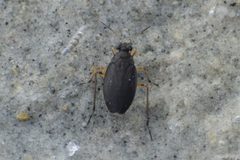
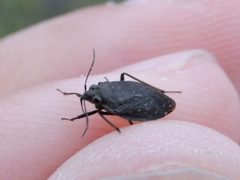
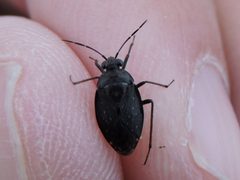
Saldini can be distinguished from the other tribe in Saldinae, Saldoidini, primarily by genitalic characters, particularly male paramere structure and female genital plate . Members generally exhibit the compact, oval body form typical of Saldidae, with relatively short and a distinct rostrum. The forewing typically shows reduced venation compared to some other shore bug groups. Accurate identification to or usually requires examination of genitalia under magnification.
Images
Habitat
Moist shoreline environments including lake margins, riverbanks, seashores, and wetlands. Often found on bare mud, sand, gravel, or among vegetation at the water's edge. Some occupy brackish coastal .
Distribution
distribution across temperate, subtropical, and tropical regions. Present on all continents except Antarctica. Individual and show varying geographic ranges, with some being widespread and others restricted to specific regions.
Seasonality
Activity patterns vary by and latitude. In temperate regions, most species are active from spring through autumn, with some as . In tropical and subtropical areas, activity may occur year-round.
Diet
Predatory, feeding on small including insect larvae, springtails, and other minute arthropods found in shoreline . Some have been observed scavenging.
Life Cycle
Hemimetabolous development with , nymph, and stages. Eggs are laid in soil or vegetation near water. Nymphs resemble smaller, wingless adults and pass through five instars. Development rate varies with temperature and conditions.
Behavior
Active runners on moist substrates, often darting quickly when disturbed. Many exhibit wing , with both (fully winged) and brachypterous (short-winged) individuals occurring in . Winged forms disperse to new ; short-winged forms are more sedentary.
Ecological Role
in shoreline , regulating of small . Serve as prey for larger invertebrates, birds, and other shoreline predators. Contribute to nutrient cycling in riparian and coastal .
Human Relevance
No direct economic importance. Occasionally encountered by entomologists and naturalists in shoreline . Some may serve as indicators of shoreline habitat quality.
Similar Taxa
- SaldoidiniThe other tribe in Saldinae; distinguished by differences in male paramere structure, female genital plate, and often more extensive wing venation patterns.
- LeptopodidaeRelated in superfamily Saldoidea; generally larger body size, longer relative to body, and different preferences including more arid environments.
More Details
Taxonomic History
Cobben (1959) established Saldini in his revision of Saldidae, separating it from Saldoidini based on genitalic . The classification has been refined through subsequent phylogenetic studies, though some generic boundaries remain under investigation.
Wing Polymorphism
Frequent occurrence of both fully-winged and short-winged forms within is a notable feature of Saldini, with environmental factors influencing morph expression.