
Saldinae
Amyot & Serville, 1843
Tribe Guides
2Saldinae is a of shore bugs ( Saldidae) within the true bugs (Hemiptera: Heteroptera). Members are small, predatory insects associated with moist shoreline . The subfamily contains multiple distributed across temperate and tropical regions worldwide.
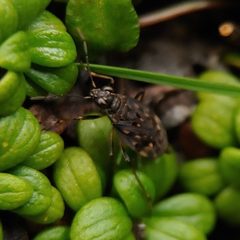
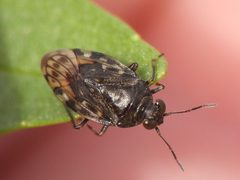
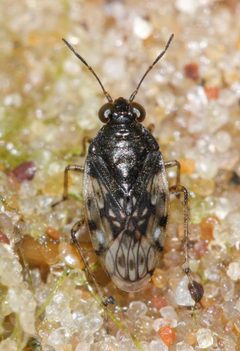
Pronunciation
How to pronounce Saldinae: /sælˈdɪniː/
These audio files are automatically generated. While they are not always 100% accurate, they are a good starting point.
Identification
Saldinae can be distinguished from the other saldid , Chiloxanthinae, by genitalic and wing venation characters. Saldinae generally have more fully developed wings and lack the extreme brachyptery and compact body form seen in many Chiloxanthinae. Identification to requires examination of male genitalia and pretarsal structures.
Images
Habitat
Primarily associated with moist shoreline environments including riverbanks, lake shores, pond margins, and seashores. Found on wet rocks, gravel, sand, and mud substrates. Some occur in brackish coastal .
Distribution
Worldwide distribution across temperate, subtropical, and tropical regions. Present in North America, Europe, Asia, Africa, Australia, and South America.
Diet
Predatory, feeding on small including springtails, larvae, and other tiny arthropods found in shoreline .
Behavior
Active that run quickly over wet substrates. Capable of and may disperse between shoreline . Often found in in suitable microhabitats.
Ecological Role
in shoreline and riparian . Contribute to regulation of small in moist edge .
Human Relevance
Occasionally encountered by entomologists and naturalists. No significant economic or medical importance. Serve as indicators of shoreline quality.
Similar Taxa
- ChiloxanthinaeOther of Saldidae; distinguished by more compact body, reduced wings, and different genitalic structures. Chiloxanthinae often occupy more specialized such as saline pools.