
Chiloxanthinae
Cobben, 1959
shore bugs
Genus Guides
2- Chiloxanthus(shore bugs)
- Pentacora(shore bugs)
Chiloxanthinae is a of shore bugs in the Saldidae, established by Cobben in 1959. It comprises approximately 7 and more than 20 described . The subfamily includes both extant and extinct , with three fossil genera known from the Oligocene and Eocene. Members are found within the broader shore bug lineage adapted to marginal aquatic .

Pronunciation
How to pronounce Chiloxanthinae: //kaɪloʊˈzænθɪˌniː//
These audio files are automatically generated. While they are not always 100% accurate, they are a good starting point.
Identification
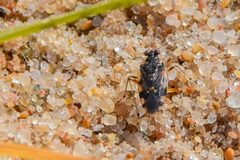
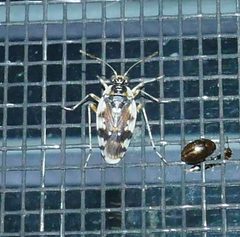
Members of Chiloxanthinae can be distinguished from other Saldidae by combinations of genitalic and wing venation characters established in Cobben's 1959 revision. The Chiloxanthus, the type genus, exhibits characteristic body proportions and coloration patterns. Fossil are recognized by preserved wing venation and body form in compression deposits. Definitive identification to subfamily level requires examination of male genitalia and detailed wing structure.
Images
Habitat
As shore bugs, members of Chiloxanthinae inhabit marginal aquatic environments including shorelines of lakes, ponds, streams, and coastal areas. Specific microhabitat preferences vary by ; Chiloxanthus are often associated with rocky or gravelly substrates. The occupies the supralittoral zone, the damp area above the waterline subject to periodic inundation.
Distribution
Extant have distributions spanning the Holarctic and other regions. Chiloxanthus occurs in the Palearctic and Nearctic. Pentacora is primarily Nearctic. Enalosalda and Propentacora have more restricted distributions. Fossil genera are known from European deposits (Germany, China).
Behavior
Ecological Role
As predatory heteropterans in shoreline , members contribute to in the supralittoral . They occupy a position between aquatic and terrestrial , consuming small invertebrates and potentially serving as prey for larger arthropods and vertebrates.
Human Relevance
No direct economic importance is documented. Members may serve as indicators of shoreline quality in ecological assessments. The group is of interest to hemipteran systematists studying the evolution of shore bug lineages.
Similar Taxa
More Details
Fossil record
The includes three fossil : Brevrimatus (Eocene, China), Oligosaldina (Oligocene, Germany), and Paralosalda (Eocene, Germany). These provide evidence for the ancient diversification of shore bugs and their former broader distribution.
Taxonomic history
Established by Cobben in his 1959 monograph on Saldidae, the has remained stable in composition, with additions of fossil and the Propentacora described by J. Polhemus in 1985.