
Rhagovelia becki
Drake & Harris, 1936
Rhagovelia becki is a of small water strider in the Veliidae, described by Drake and Harris in 1936. Like other members of the Rhagovelia, this species is adapted to life on the water surface, utilizing the middle and hind legs for propulsion. The species has been recorded from Middle America and North America, though detailed ecological studies remain limited. It belongs to a diverse genus containing over 100 described species, many of which occupy specialized microhabitats along streams and rivers.
Pronunciation
How to pronounce Rhagovelia becki: //ræˈɡoʊ.viː.li.ə ˈbɛki//
These audio files are automatically generated. While they are not always 100% accurate, they are a good starting point.
Identification
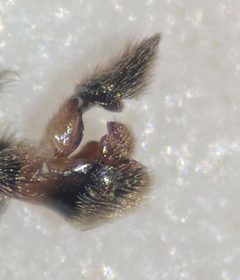
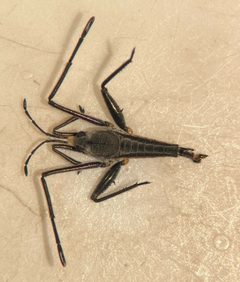
Members of Rhagovelia are distinguished from other veliid by the presence of a fan-like array of setae on the of the middle legs, which aids in rapid movement across water surfaces. Rhagovelia becki can be separated from by specific genitalic and wing venation characters described in the original 1936 description. The is small-bodied, with likely measuring under 5 mm in length. Precise identification requires examination of male genitalia and comparison with type material.
Images
Habitat
Rhagovelia generally inhabit flowing water including streams, rivers, and seeps. Based on -level patterns, R. becki likely occurs in lotic environments with moderate current. Specific microhabitat preferences for this species have not been documented.
Distribution
Recorded from Middle America and North America. The precise range boundaries are poorly defined due to limited collecting effort and few verified records.
Similar Taxa
- Rhagovelia obesaOverlaps in distribution and shares general body plan; distinguished by differences in male genitalia structure and body proportions.
- Other Veliidae genera (e.g., Veloidea, Microvelia)Occupy similar surface-water ; Rhagovelia is distinguished by the fan-like setal arrays on middle , which other lack.
More Details
Taxonomic note
The original description by Drake and Harris (1936) was based on material from Central America. The remains poorly known, with only 4 observations documented in iNaturalist as of the data cutoff.