
Trepobates floridensis
Drake & Harris, 1928
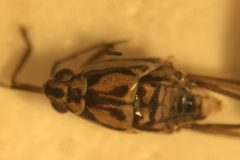
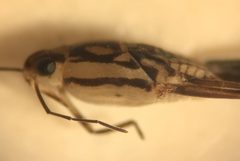
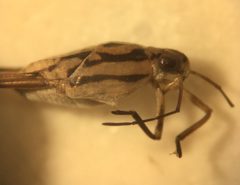
Trepobates floridensis is a of water strider in the Gerridae, first described by Drake & Harris in 1928. It is to the southeastern United States, with a range extending throughout Florida into southern Georgia and west to Mississippi. As a member of the Trepobatinae, it inhabits freshwater surface where it uses surface tension to locomote and forage.
Pronunciation
How to pronounce Trepobates floridensis: /ˌtɹɛ.poʊˈbeɪ.tiːz ˌflɔːrɪˈdɛn.sɪs/
These audio files are automatically generated. While they are not always 100% accurate, they are a good starting point.
Images
Habitat
Freshwater surface including ponds, lakes, and slow-moving streams. As a member of the Trepobatinae, it is typically associated with lentic (still water) environments rather than lotic (flowing water) systems.
Distribution
Southeastern United States: throughout Florida, southern Georgia, and west to Mississippi.
Behavior
Uses surface tension to skate across water surfaces. Like other gerrids, it detects prey and via surface wave signals.
Ecological Role
in freshwater surface . Contributes to top-down regulation of in aquatic .
Similar Taxa
- Other Trepobates speciesMembers of this share the Trepobatinae characteristics and require careful examination of genitalic structures and other morphological details for definitive identification.
- Other Gerridae generaWater striders in other (e.g., Gerrinae) may occupy similar but differ in body proportions, leg structure, and habitat preferences.
More Details
Taxonomic history
Described by Drake & Harris in 1928. The Trepobates belongs to the Trepobatinae, a group of water striders primarily associated with the New World tropics and subtropics.
Research status
This has received limited dedicated study beyond original description and basic distributional records. Detailed ecological and behavioral studies appear to be lacking in the accessible literature.