Enicocephalomorpha
unique-headed bugs
Family Guides
2- Aenictopecheidae
- Enicocephalidae(unique-headed bugs)
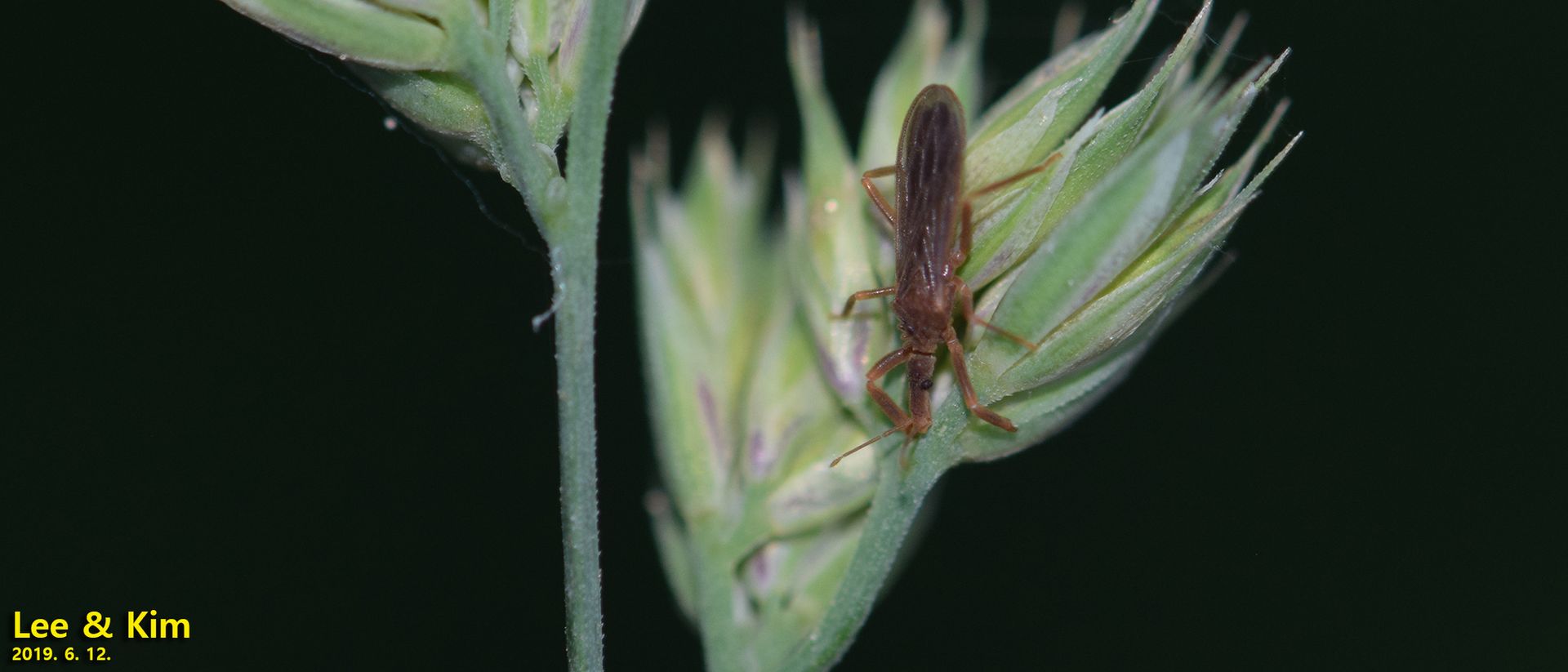
is an infraorder of true bugs (Hemiptera: Heteroptera) commonly known as unique-headed bugs. The group was formerly thought related to Reduviidae due to structure similarities, but is now recognized as sufficiently distinct to constitute a separate infraorder and probably represents the sister group to the rest of Heteroptera. The infraorder contains the Enicocephalidae, with such as Systelloderes and Xenicocephalus. Many remain undescribed, particularly from tropical regions.
Pronunciation
How to pronounce Enicocephalomorpha: //ɛnɪkoʊˌsɛfələˈmɔrfə//
These audio files are automatically generated. While they are not always 100% accurate, they are a good starting point.
Images
Habitat
Humid tropical and subtropical forests; also present in humid microhabitats of temperate and arid zones. Specific records include montane/cloud forest zones at elevations up to 2600m in Ecuador.
Distribution
Nearly distribution. Eastern Hemisphere: continental Africa, Madagascar, New Zealand, New Caledonia. Western Hemisphere: North America, Central America, South America (Venezuela, Bolivia, Brazil, Chile, Peru, Ecuador), with first Ecuadorian records documented in recent literature. Turkey: represented by a single in Asian Turkey only. Iran: two and two species recorded.
Behavior
Members of the Xenicocephalus possess unique foreleg architecture among , with thick curved and tibiae bearing deeply concave and specialized apicitibial armature including long tibial processes with palisade-like spines and distinct spine clusters.
Similar Taxa
- ReduviidaeFormerly thought to be related due to similarities in structure; now recognized as distinct at infraorder level
- Other Heteroptera infraorders probably represents the sister group to the remainder of Heteroptera, distinguishing it from Nepomorpha, Gerromorpha, Leptopodomorpha, and Dipsocoromorpha
More Details
Taxonomic Position
The infraorder contains the Enicocephalidae. The Xenicocephalus is currently classified as incertae sedis due to its unique morphological features.
Undescribed Diversity
Many of remain undescribed, especially from the Afrotropical, Neotropical, and Oriental Regions.
Known Material Limitations
Some are extremely poorly known; Xenicocephalus was represented by only 2.5 specimens across three until 2018.
Sources and further reading
- BugGuide
- iNaturalist taxon
- NCBI Taxonomy
- A new Xenicocephalus species from Ecuador (Heteroptera, Enicocephalomorpha, Enicocephalidae)
- First record of Systelloderes (Hemiptera: Heteroptera: Enicocephalidae) from Ecuador with a list of Ecuadorian Enicocephalomorpha
- Annotated catalogue of Enicocephalomorpha, Dipsocoromorpha, Nepomorpha, Gerromorpha, and Leptopodomorpha (Hemiptera: Heteroptera) of Turkey, with new records
- An annotated catalog of the Iranian Dipsocoromorpha, Enicocephalomorpha, Gerromorpha, Leptopodomorpha and Nepomorpha (Hemiptera: Heteroptera)