
Tupiocoris
China & Carvalho, 1952
Species Guides
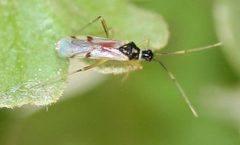
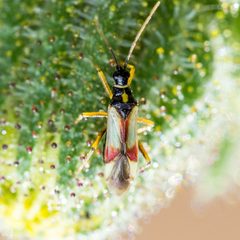
7Tupiocoris is a of plant bugs in the Miridae containing approximately nine described . The genus includes both herbivorous and predatory species. Tupiocoris notatus is a Solanaceae-specializing herbivore with documented -level research on plant transcriptional responses. Tupiocoris cucurbitaceus is a predatory mirid studied as a potential biocontrol agent for tomato pests in Argentina. Species within this genus show divergent feeding strategies, with some functioning as herbivores and others as .
Pronunciation
How to pronounce Tupiocoris: //ˌtuːpi.oʊˈkɔːrɪs//
These audio files are automatically generated. While they are not always 100% accurate, they are a good starting point.
Images
Distribution
Argentina (T. cucurbitaceus); Tucson, Arizona, USA (T. notatus, greenhouse ); Scandinavia (Denmark, Norway, Sweden based on GBIF records). -specific distributions are poorly documented for most members of the .
Human Relevance
Tupiocoris cucurbitaceus has been investigated as a agent for tomato crop pests, particularly the South American tomato leafminer (Tuta absoluta) and the greenhouse whitefly (Trialeurodes vaporariorum). Laboratory studies demonstrate predatory with capacity to consume multiple pest . Field implementation requires further study of prey availability and . Tupiocoris notatus is a pest of Solanaceae crops including Datura wrightii and Nicotiana attenuata, with documented plant damage through feeding.
Similar Taxa
- DicyphusBoth are mirid containing predatory used in biocontrol; Dicyphus species are more extensively documented in European biocontrol programs while Tupiocoris research focuses on Neotropical systems
- NesidiocorisAnother mirid with predatory biocontrol agents; Nesidiocoris tenuis is widely used commercially for whitefly and control, whereas Tupiocoris cucurbitaceus remains under investigation and not yet commercially deployed
- MacrolophusEuropean mirid biocontrol with similar predatory ; Macrolophus pygmaeus is established in commercial use, while Tupiocoris are regionally studied but less commercially developed
Sources and further reading
- BugGuide
- Wikipedia
- GBIF taxonomy match
- iNaturalist taxon
- NCBI Taxonomy
- Catalogue of Life
- Figure 4. Tupiocoris notatus transfers IP to leaves of its host plant.
- Figure 4—figure supplement 1. Tupiocoris notatus transfers IPR to leaves of its host plant.
- Searching behavior and prey preference by the predatory mirid bug Tupiocoris cucurbitaceus, a potential biocontrol agent of tomato crops in Argentina
- A pooled-sample draft genome assembly provides insights into host plant-specific transcriptional responses of a Solanaceae-specializing pest, Tupiocoris notatus (Hemiptera: Miridae)
- A pooled‐sample draft genome assembly provides insights into host plant‐specific transcriptional responses of a Solanaceae‐specializing pest, Tupiocoris notatus (Hemiptera: Miridae)
- Laboratory evaluation of the feeding behavior of the generalist predatory mirid bug Tupiocoris cucurbitaceus (Hemiptera: Miridae) for the biological control of Phthorimaea absoluta (Lepidoptera: Gelechiidae)
- Biology ofTupiocoris cucurbitaceus(Hemiptera: Miridae), a predator of the greenhouse whiteflyTrialeurodes vaporariorum(Hemiptera: Aleyrodidae) in tomato crops in Argentina
- Life history study of the mirid Tupiocoris cucurbitaceus feeding on Tuta absoluta eggs: implications for biological control and its combination with inherited sterility