
Stenocranus
Fieber, 1866
delphacid planthoppers
Species Guides
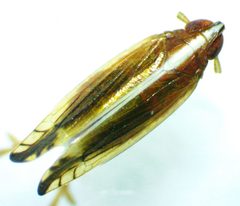
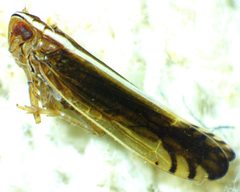
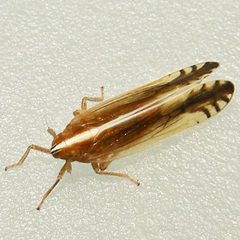
13Stenocranus is a of delphacid planthoppers in the Delphacidae, containing more than 70 described . Species within this genus exhibit wing , with (long-winged) and sub-macropterous forms occurring in at least some species. Several species are documented crop pests, particularly of corn, rice, and sugarcane. The genus has a broad distribution with records from Europe, North America, and Asia, though individual species vary in their geographic ranges. Some species have shown potential, with range expansions into new regions documented in recent decades.
Pronunciation
How to pronounce Stenocranus: //stɛˈnɒkrənəs//
These audio files are automatically generated. While they are not always 100% accurate, they are a good starting point.
Images
Habitat
in this are associated with grasses and grass-like plants. Stenocranus minutus has been observed on Dactylis glomerata (cocksfoot grass). Stenocranus pacificus and related species occur in corn fields, rice paddies, and sugarcane plantations. conditions influencing form development in S. minutus include plant wilting status and temperature.
Distribution
-level records from Denmark, Norway, Sweden, and Vermont, USA. Stenocranus pacificus: originally from tropical South Pacific islands; established in tropical and subtropical Asia by early 21st century; first recorded in temperate Asia (mainland Japan, Kumamoto Prefecture) in 2019–2020. Stenocranus nr. pseudopacificus reported from Kalinga, Luzon, Philippines. Stenocranus pacificus studied in West Sumatra, Indonesia.
Diet
Phloem-feeding on grasses (Poaceae). Documented include: Dactylis glomerata (cocksfoot grass) for S. minutus; Zea mays (corn), Oryza sativa (rice), Saccharum sp. (sugarcane), and other grasses for S. pacificus.
Life Cycle
Stenocranus nr. pseudopacificus has four nymphal stages. incubation: 11–12 days. Nymphal stages: N1 4–5 days, N2 3–6 days, N3 6–7 days, N4 2–6 days. longevity: 9–13 days. Total excluding egg incubation: 24–37 days. Wing present: and sub-macropterous adult forms occur in at least S. minutus.
Behavior
forms of S. minutus disperse by ; sub-macropterous forms hop but have reduced flight capability. Macropterous S. minutus migrate a few weeks after while still , coinciding with drying of plant. in S. minutus favored by relatively high temperature, low wind speeds, and limited sunlight hours. Both macropterous and sub-macropterous forms can hop under laboratory conditions; macropterous forms fly longer.
Ecological Role
Prey for flies: S. minutus is for Cephalops curtifrons (Diptera: Pipunculidae), an . Subject to by natural enemies including Hymenoptera, Coleoptera, and Araneae in corn agroecosystems.
Human Relevance
Several are crop pests. Stenocranus pacificus is a serious pest of corn in Southeast Asia, also feeding on rice, sugarcane, sorghum, and other grasses; potential in temperate Asia. Stenocranus nr. pseudopacificus identified as corn pest in Philippines. Potential for phytopathogens, though vectorial capacity not fully established for most species.
Sources and further reading
- BugGuide
- Wikipedia
- GBIF taxonomy match
- iNaturalist taxon
- NCBI Taxonomy
- Catalogue of Life
- Stenocranus pacificus Kirkaldy. [Distribution map].
- Study of two forms of the adult Stenocranus minutus
- The biology of Cephalops curtifrons (Diptera: Pipunculidae), an endoparasite of Stenocranus minutus (Hemiptera: Delphacidae)
- First report of the invasive crop pest Stenocranus pacificus (Hemiptera: Delphacidae) in temperate Asia
- Morphology, Life Stages, and Longevity of a New Report of Stenocranus near pseudopacificus (Kirkaldy) in Kalinga, Philippines
- Abundance of corn planthopper (Stenocranus pacificus) (Hemiptera: Delphacidae) and the potential natural enemies in West Sumatra, Indonesia