
Idiocerini
Baker, 1915
Genus Guides
6Idiocerini is a tribe of leafhoppers ( Cicadellidae) within the Eurymelinae, containing approximately 60–70 and roughly 500 . The tribe has a distribution, with significant diversity in the Nearctic, Palearctic, Oriental, and Afrotropical regions. Members are small leafhoppers, many of which are associated with woody plants and include economically significant agricultural and forest pests. The tribe was formerly treated as a subfamily but is now classified within Eurymelinae.
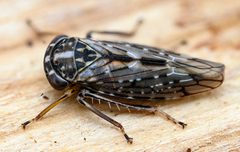
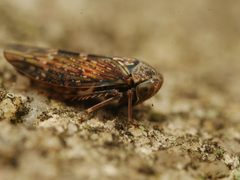
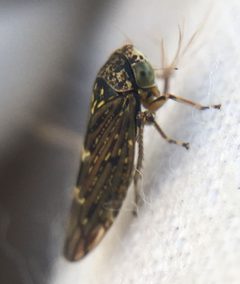
Pronunciation
How to pronounce Idiocerini: /ˌɪdiˌoʊsɛˈraɪnaɪ/
These audio files are automatically generated. While they are not always 100% accurate, they are a good starting point.
Identification
Idiocerini can be distinguished from other Eurymelinae tribes by male genitalic characters, particularly the structure of the aedeagal shaft with paired processes. Additional diagnostic features include male antennal , male abdominal apodemes, and female ovipositor structure. Within the tribe, are separated by capsule shape, wing venation patterns, and detailed male genitalic configurations. -level identification typically requires examination of male genitalia.
Images
Habitat
Members of Idiocerini inhabit diverse environments where their plants occur. Specific records include mountainous forested regions at elevations of 1581–1956 m in Yunnan Province, China. The tribe is broadly associated with trees and shrubs across temperate and tropical zones.
Distribution
distribution spanning Nearctic (excluding Sonoran subregion in some studies), Palearctic, Oriental, and Afrotropical regions. Documented from China (Yunnan, Hainan, Henan, Guizhou, Zhejiang, Shaanxi, Taiwan), North America, and other global localities.
Diet
Phloem-feeding on vascular plants. in the Idioscopus have been recorded from Myrica (Myricaceae), Mangifera (Anacardiaceae), Dimocarpus (Sapindaceae), and Prunus (Rosaceae).
Host Associations
- Myrica - plantMyricaceae; recorded for Idioscopus ventrispinus
- Mangifera - plantAnacardiaceae; cited for Idioscopus
- Dimocarpus - plantSapindaceae; cited for Idioscopus
- Prunus - plantRosaceae; cited for Idioscopus
Behavior
Specimens have been collected using sweep nets in vegetation. Many are recognized as agricultural and forest pests.
Ecological Role
Certain members function as agricultural and forest pests through feeding on economically important woody plants. The tribe contributes to phloem-feeding insect associated with trees and shrubs.
Human Relevance
Some are economically significant as pests of agricultural crops and forest trees, including mango (Mangifera) and related fruit trees. The tribe has been subject to extensive taxonomic study due to its agricultural importance and .
Similar Taxa
- Other Eurymelinae tribesIdiocerini shares Eurymelinae with other tribes but differs in male genitalic , particularly aedeagal shaft structure with paired processes, and antennal characters.
More Details
Taxonomic history
Formerly treated as the Idiocerinae, now included within Eurymelinae following phylogenetic studies.
Phylogenetic research
Complete mitochondrial have been sequenced for multiple (Anidiocerus, Hyalinocerus, and others), confirming Idiocerini as a monophyletic clade within Eurymelinae.
Notable genera
Includes Idiocerus (the type with numerous subgenera), Idioscopus, Rhytidodus, Balcanocerus, and Amritodus among 60+ recognized genera.
Sources and further reading
- BugGuide
- Wikipedia
- iNaturalist taxon
- NCBI Taxonomy
- Catalogue of Life
- Descriptions of two new Idiocerini leafhoppers of the genus Idioscopus (Hemiptera, Cicadellidae) from China
- REVIEW OF THE NEARCTIC IDIOCERINI, EXCEPTING THOSE FROM THE SONORAN SUBREGION (RHYNCHOTA: HOMOPTERA: CICADELLIDAE)
- The complete mitochondrial genome of Anidiocerus bimaculatus Zhang, Li & Qi, 2008 (Hemiptera: Cicadellidae: Eurymelinae: Idiocerini).
- Complete mitogenome and phylogenetic analysis of Hyalinocerus flavoscutatus Cai and Shen 1998 (Hemiptera: Eurymelinae: Idiocerini).
- Complete Mitogenome Analysis of Five Leafhopper Species of Idiocerini (Hemiptera: Cicadellidae).