
Balcanocerus
Maldonado Capriles, 1971
Species Guides
6Balcanocerus is a of leafhoppers in the Cicadellidae, Eurymelinae. in this genus are -attended and feed on phloem sap from plants in Rosaceae. The genus includes both North American and European species, with documented associations with specific ant partners and host trees.
Pronunciation
How to pronounce Balcanocerus: /bælˈkænoʊˌsɪərəs/
These audio files are automatically generated. While they are not always 100% accurate, they are a good starting point.
Identification
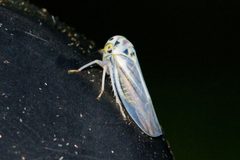
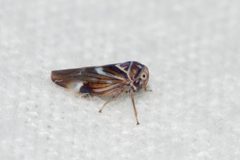
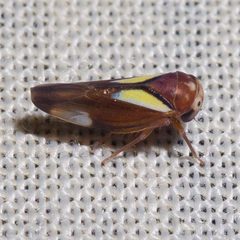
Members of Balcanocerus can be distinguished from related Idiocerini by -attended aggregative and specific plant associations. B. agapetomyrmices differs from B. balcanicus in colouration and male and female genitalia. B. fitchi has distinctive white and black wing with white lines hooking inwards from wing connection, yellow vertex with two large black spots, and orange-yellow-brown with yellow-brown and dark brown spots.
Images
Habitat
Open forest environments. B. fitchi occurs in northeastern United States and southeastern Canada; B. agapetomyrmices is associated with Pyrus amygdaliformis in Bulgaria.
Distribution
North America (northeastern United States, Vermont); Europe (Bulgaria, Denmark); Palaearctic Region.
Diet
Phloem sap feeding on Rosaceae plants. B. fitchi feeds on hawthorn (Crataegus) and crab apple (Malus); B. agapetomyrmices feeds on Pyrus amygdaliformis.
Host Associations
Life Cycle
Behavior
Ecological Role
Phloem feeder that produces honeydew, supporting mutualists. Potential pest of Rosaceae fruit trees.
Human Relevance
Potential minor pest of hawthorn and crab apple; otherwise limited direct economic impact.
Similar Taxa
- B. balcanicusClose to B. agapetomyrmices but differs in colouration and genitalia
- Other Idiocerini generaBalcanocerus distinguished by -attended aggregative and specific Rosaceae associations