
Eurymelinae
Amyot & Audinet-Serville, 1843
Tribe Guides
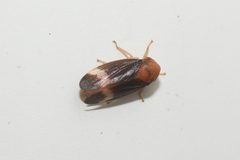
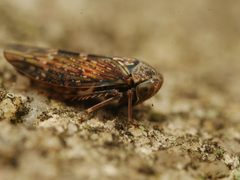
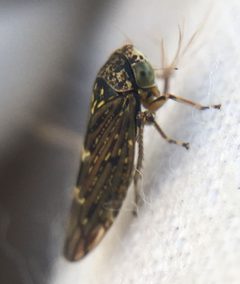
3Eurymelinae is a of leafhoppers (Cicadellidae) with worldwide distribution. Members are phloem-feeding insects that maintain complex obligate with microorganisms including bacteria (Sulcia, Nasuia, Sodalis) and yeast-like fungi (Ophiocordycipitaceae) to synthesize . The subfamily exhibits notable ecological diversity, including -attended that engage in .
Pronunciation
How to pronounce Eurymelinae: //ˌjʊrɪmɛˈlaɪniː//
These audio files are automatically generated. While they are not always 100% accurate, they are a good starting point.
Images
Habitat
Associated with vascular plants; specific requirements vary by tribe and . Some inhabit mountain landscapes in Central Asia (e.g., Macropsidius in Kazakhstan). plants include Rosaceae (Pyrus amygdaliformis documented for Balcanocerus).
Distribution
Worldwide. Documented occurrences include: Bulgaria (Palaearctic); Southern Kazakhstan; Malaysia; Brazil, Colombia, Ecuador, French Guiana, Peru (Neotropical); Southeast Asia to Australia (Balocerini).
Diet
Phloem sap from vascular plants. Feeding on phloem fibers necessitates obligate microbial for nutrient supplementation.
Host Associations
- Pyrus amygdaliformis Villars, 1807 (Rosaceae) - plantdocumented for Balcanocerus agapetomyrmices
- Lasius bombycina Seifert & Galkowski, 2016 - partner; feeds on honeydew excreted by Balcanocerus
Life Cycle
Obligate transmitted transovarially via of female ovaries.
Behavior
Some form small of 4–6 individuals. -attendance () observed: and nymphs excrete honeydew collected by ants. Males of some species (e.g., Macropsidius) produce vibrational calling signals for communication.
Ecological Role
Phloem feeders with reduced genomic ; may show lower adaptive capacity to environmental change compared to relatives with facultative microbiomes. -attended contribute to trophic interactions with Formicidae.
Similar Taxa
- TyphlocybinaeClose phylogenetic relatives within Cicadellidae; distinguished by diet (Typhlocybinae feed on mesophyll/parenchyma, Eurymelinae on phloem) and microbiome composition (Typhlocybinae lack obligate , Eurymelinae harbor diverse obligate and facultative symbionts)
Sources and further reading
- BugGuide
- Wikipedia
- iNaturalist taxon
- NCBI Taxonomy
- Catalogue of Life
- A new species of ant-attended Balcanocerus from Bulgaria (Hemiptera: Cicadellidae: Eurymelinae)
- Extremely distinct microbial communities in closely related leafhopper subfamilies: Typhlocybinae and Eurymelinae (Cicadellidae, Hemiptera)
- Macropsidius bogutensis (Mityaev, 1990) species group (Hemiptera: Auchenorrhyncha: Cicadellidae: Eurymelinae: Macropsini) in Kazakhstan: taxonomy, biology, and evolution
- Review of the genus Macropsis Lewis, 1836 (Homoptera: Auchenorrhyncha: Cicadellidae: Eurymelinae: Macropsini) of Southeastern Kazakhstan with description of new species
- First record of the leafhopper genus Pedionis (Hemiptera: Cicadellidae: Eurymelinae: Macropsini) from Malaysia with description of a new species
- Extremely distinct microbial communities in closely related leafhopper subfamilies: Typhlocybinae and Eurymelinae (Cicadellidae, Hemiptera)
- Taxonomic revision of the Neotropical leafhopper genus Barolineocerus Freytag, 2008 (Hemiptera: Cicadellidae: Eurymelinae: Chiasmodolini), with descriptions of three new species and an updated key to species