
Macropsini
Evans, 1936
Genus Guides
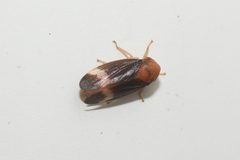
6Macropsini is a tribe of leafhoppers in the Cicadellidae, currently placed within the Eurymelinae. Formerly treated as a subfamily (Macropsinae), this group has been reclassified based on phylogenetic studies. The tribe contains at least 18 distributed across multiple continents, with notable diversity in North America, Eurasia, and Australia. in this tribe exhibit considerable morphological variation and include some that are associated with specific plants.


Pronunciation
How to pronounce Macropsini: /ˌmækrəpˈsaɪni/
These audio files are automatically generated. While they are not always 100% accurate, they are a good starting point.
Identification
Macropsini leafhoppers can be distinguished from other Eurymelinae tribes by combinations of genitalic and wing venation characters, though specific diagnostic features vary by . Members of the tribe typically exhibit the enlarged hind characteristic of Cicadellidae. Detailed identification requires examination of male genitalia; keys to genera and are available for regional faunas including North America and Kazakhstan.
Images
Habitat
vary by and region. of Macropsidius have been documented from mountain landscapes in Kazakhstan, including the Syrdaryinskiy Karatau Range. North American species occupy diverse environments from southern California and Arizona through the Pacific Northwest, northeastern forests, and Canadian prairies. Australian representatives occur in varied terrestrial habitats.
Distribution
Widespread across multiple continents. Documented from North America (Mexico, United States, Canada), Eurasia (Kazakhstan, China, Russia, Europe), Australia, Malaysia, and Chile. The Stenopsoides is to Australia. The genus Pedionis has been recorded from Malaysia. Neopsini, a related tribe, is exclusively Neotropical.
Behavior
Male Macropsidius produce species-specific calling signals (vibrational signals) used in mate location and recognition. The Stenopsoides has been discussed as potentially exhibiting parthenogenetic , though this remains unconfirmed.
Human Relevance
Some serve as subjects for studies of mitochondrial evolution and phylogenetic relationships within leafhoppers. The tribe has been the focus of extensive taxonomic revision due to its systematic complexity.
Similar Taxa
- NeopsiniFormerly grouped with Macropsini; distinguished by being exclusively Neotropical with two (Neopsis and Nollia) versus the broader geographic distribution and greater generic diversity of Macropsini.
- Other Eurymelinae tribesMacropsini is distinguished within Eurymelinae by specific combinations of morphological characters; historically treated as Macropsinae before reclassification.
More Details
Taxonomic History
Macropsini was formerly treated as the Macropsinae but has been reclassified as a tribe within Eurymelinae based on phylogenetic analyses. This reclassification reflects improved understanding of relationships within Cicadellidae.
Research Significance
The tribe has been extensively studied for its mitochondrial structure and usage patterns. Studies have examined from China, Kazakhstan, and other regions to understand phylogenetic relationships within the group.
Notable Genera
Macropsis (55 in New World), Oncopsis (36 species in New World), and Pediopsoides are particularly species-rich in certain regions. The Macropsidius has been studied for its and evolutionary in Kazakhstan.
Sources and further reading
- BugGuide
- Wikipedia
- iNaturalist taxon
- NCBI Taxonomy
- Catalogue of Life
- Revision of a unique Australian leafhopper genus Stenopsoides Evans (Hemiptera: Cicadellidae: Idiocerinae: Macropsini)
- Macropsidius bogutensis (Mityaev, 1990) species group (Hemiptera: Auchenorrhyncha: Cicadellidae: Eurymelinae: Macropsini) in Kazakhstan: taxonomy, biology, and evolution
- Review of the genus Macropsis Lewis, 1836 (Homoptera: Auchenorrhyncha: Cicadellidae: Eurymelinae: Macropsini) of Southeastern Kazakhstan with description of new species
- First record of the leafhopper genus Pedionis (Hemiptera: Cicadellidae: Eurymelinae: Macropsini) from Malaysia with description of a new species
- REVISION OF THE MACROPSINI AND NEOPSINI OF THE NEW-WORLD (RHYNCHOTA: HOMOPTERA: CICADELLIDAE), WITH NOTES ON INTERSEX MORPHOLOGY
- Mitochondrial genomes of Macropsini (Hemiptera: Cicadellidae: Eurymelinae): Structural features, codon usage patterns, and phylogenetic implications.
- Six new species of the leafhopper subgenus Pediopsoides (Pediopsoides) (Hemiptera, Cicadellidae, Eurymelinae, Macropsini) from China.
- Description of two new species of the leafhopper genus Pediopsis Burmeister (Hemiptera, Cicadellidae, Eurymelinae, Macropsini) from China.