
Davisonia
Dorst, 1937
Species Guides
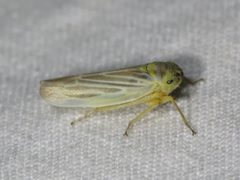
3Davisonia is a of leafhoppers in the Cicadellidae, Deltocephalinae, and tribe Macrostelini. It was described by Dorst in 1937. The genus belongs to the diverse group of true bugs (Hemiptera) characterized by . As a member of Macrostelini, it is part of a tribe known for with relatively slender body forms and association with various plants.
Pronunciation
How to pronounce Davisonia: /ˌdævɪˈsoʊniə/
These audio files are automatically generated. While they are not always 100% accurate, they are a good starting point.
Identification
Members of Davisonia can be distinguished from other Macrostelini by genitalic characters, particularly the structure of the male and the configuration of the female sternite VII. As with many leafhopper genera, definitive identification requires examination of internal genitalia under magnification. The genus shares the general Macrostelini characteristics of slender, elongate body form and relatively long wings that extend past the .
Images
Distribution
Records of Davisonia observations exist from multiple continents, with iNaturalist data indicating presence across scattered locations. The appears to have a wide but patchy distribution, though specific range boundaries remain poorly documented.
Ecological Role
As with other leafhoppers in Cicadellidae, in Davisonia likely function as phloem-feeding herbivores on plants, potentially serving as for plant including phytoplasmas and viruses. Their specific ecological roles have not been individually studied.
Human Relevance
No direct economic or medical significance has been documented for Davisonia. The has not been reported as an agricultural pest or in published literature.
Similar Taxa
- MacrostelesBoth belong to tribe Macrostelini and share slender body ; Davisonia is distinguished by male genitalic structures and lacks the distinctive color patterns found in many Macrosteles .
- BalcluthaAnother Macrostelini with similar overall habitus; Davisonia differs in genitalic configuration and geographic distribution patterns.
More Details
Taxonomic history
The was established by Dorst in 1937, but has received limited taxonomic revision since its description. The type and number of included species require verification against modern taxonomic standards.
Research status
Davisonia remains poorly studied compared to related such as Macrosteles. No comprehensive -level revisions or phylogenetic analyses have been published, and most biological information must be inferred from tribal-level characteristics with appropriate caution.