
Paraleptophlebia
Lestage, 1917
Species Guides
9- Paraleptophlebia aquilina
- Paraleptophlebia bicornuta(pronggilled mayfly)
- Paraleptophlebia debilis(mahogany dun)
- Paraleptophlebia gregalis
- Paraleptophlebia guttata(dappled prong-gilled mayfly)
- Paraleptophlebia helena(pronggilled mayfly)
- Paraleptophlebia praepedita(pronggilled mayfly)
- Paraleptophlebia strigula(streaky prong-gilled mayfly)
- Paraleptophlebia vaciva(pronggilled mayfly)
A of mayflies in the Leptophlebiidae comprising approximately 57 . are found in riparian vegetation near streams, while nymphs inhabit aquatic environments. The genus shows a disjunct distribution pattern in North America, with some species having eastern and western separated by the Great Plains. Species identification relies heavily on male genitalia and nymphal mouthpart characters.

Pronunciation
How to pronounce Paraleptophlebia: /ˌpærəˌlɛptoʊˈfliːbiə/
These audio files are automatically generated. While they are not always 100% accurate, they are a good starting point.
Identification
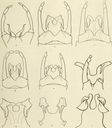
males distinguished by form of appendages and apex of lobes. Nymphs identified by mouthpart characters including ratio of maxillary and labial palp segment lengths, hypopharynx shape, and claw structure. Nymphs of northeastern Nearctic require careful examination due to morphological variability with development and between sexes.
Images
Habitat
Stream environments. Nymphs are aquatic and inhabit lotic systems. found in riparian vegetation near streams.
Distribution
North America including northeastern and northwestern Nearctic regions, western North America including Wyoming; British Isles; parts of Western Europe including Denmark, Norway, Sweden; Russian Far East.
Life Cycle
Hemimetabolous development with , nymph, and stages. Nymphs are the primary feeding and growth stage. Adults are short-lived and do not feed.
Behavior
engage in reproductive involving copulation of variable duration. selection behavior has been observed in stream-dwelling nymphs.
Ecological Role
Aquatic nymphs function as primary consumers in stream . serve as food for riparian . Several show apparent vulnerability to large- changes in occurrence resulting from predicted effects of climate change on regional aquatic .
Human Relevance
Used as bioindicators of stream health and water quality. Some have disjunct associated with uranium mining areas in the western North Platte River drainage.
Similar Taxa
- NeoleptophlebiaNymphs of northeastern Nearctic are frequently confused with Paraleptophlebia; both require reassessment of for accurate identification
Sources and further reading
- BugGuide
- Wikipedia
- GBIF taxonomy match
- iNaturalist taxon
- NCBI Taxonomy
- Catalogue of Life
- Habitat Selection by the Stream Mayfly Paraleptophlebia guttata
- ORTHOGRAPHY AND DISTRIBUTION OF PARALEPTOPHLEBIA PACKII (EPHEMEROPTERA: LEPTOPHLEBIIDAE) IN WESTERN NORTH AMERICA
- A new species of Paraleptophlebia Lestage, 1917 (Ephemeroptera: Leptophlebiidae) and a re-description of adults for Paraleptophlebia westoni Imanishi, 1937 with the first description of the larva, from the Russian Far East
- Reproductive behavior and morphology of Paraleptophlebia spinosa (Ephemeroptera: Leptophlebiidae): implications of variation in copula duration
- Geographic range extension to Wyoming, USA, for Paraleptophlebia praepedita (Eaton, 1884) (Insecta: Ephemeroptera: Leptophlebiidae)
- Nymphs of the Northeastern Nearctic Species of Neoleptophlebia Kluge, 1997 and Paraleptophlebia Lestage, 1917 (Ephemeroptera: Leptophlebiidae)
- An annotated key to the adult males of the northwestern Nearctic species of Paraleptophlebia Lestage (Ephemeroptera: Leptophlebiidae) with the description of a new species