
Baetisca
Walsh, 1862
armored mayflies
Species Guides
4Baetisca is a of armored mayflies comprising approximately 12 described in the Baetiscidae. Nymphs are distinguished by their construction of protective cases from sand grains and silk. The genus is found in small, cool streams across eastern and central North America, with some species extending into western Canada. Most studied species exhibit with winter nymphal growth and spring or early summer .
Pronunciation
How to pronounce Baetisca: /baɪˈtɪska/
These audio files are automatically generated. While they are not always 100% accurate, they are a good starting point.
Identification
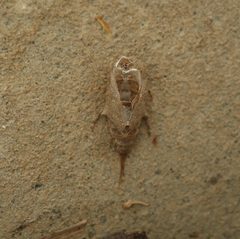
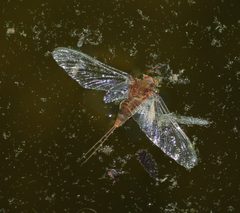
Nymphs are readily identified by their sand-grain cases, which are unique among North American mayflies and immediately distinguish Baetiscidae from all other . Within the , identification requires examination of nymphal case structure, gill , and detailed body patterns. require examination of genitalia and wing venation for definitive species identification. Distinguishing Baetisca from the related genus Protobaetisca (where present) requires specialized taxonomic knowledge.
Images
Habitat
Small, cool, spring-fed streams with sandy substrates; nymphs occupy areas with moderate current velocities and abundant detritus. Specific microhabitat preferences are influenced by case-building requirements, limiting distribution to streams with suitable sand availability.
Distribution
Eastern and central North America, from Florida to Canada; western records include Saskatchewan and Alberta. -level distributions vary, with B. carolina documented in West Virginia, B. rogersi in northwestern Florida, and B. bajkovi extending into western Canada.
Seasonality
occurs from late May through July depending on and latitude. Nymphs are present year-round, with active growth during autumn through spring and during summer months.
Diet
Collector-gatherer; nymphs feed on detritus and periphyton.
Life Cycle
; undergo during summer months. Nymphal growth occurs from autumn through spring. emerge in late spring to early summer. Specific timing varies by and geographic location.
Behavior
Nymphs construct and inhabit protective cases made of sand grains and silk. Case-building influences microdistribution within streams, with nymphs selecting locations with appropriate sand size and current conditions. Cases are presumed to provide protection from and physical disturbance, and may aid in respiration.
Ecological Role
Primary consumer functioning as collector-gatherer in headwater stream . Contributes to detritus processing and energy transfer in small stream .
Human Relevance
Used as bioindicators of water quality in small stream systems due to specific requirements. Occasionally encountered by anglers as nymphs dislodge from substrates, though are short-lived and of limited fishing significance.
Similar Taxa
- ProtobaetiscaRelated in Baetiscidae; requires examination of nymphal gill structure and genitalia for separation.
- Other Ephemeroptera familiesAll other lack the sand-grain case construction ; nymphs without cases or with different case materials (e.g., mineral cases in some Leptophlebiidae) are readily distinguished.
More Details
Case construction
The sand-grain case is the most distinctive feature of the and . Case construction requires specific substrate conditions, explaining the restricted distribution to sandy-bottomed streams.
Research limitations
Most detailed ecological information comes from intensive studies of individual (B. carolina, B. berneri, B. rogersi, B. bajkovi). -level generalizations should be treated cautiously where species-specific data are lacking.
Sources and further reading
- BugGuide
- Wikipedia
- GBIF taxonomy match
- iNaturalist taxon
- NCBI Taxonomy
- Catalogue of Life
- The Life History and Ecology of Baetisca rogersi Berner (Ephemeroptera: Baetiscidae)
- Baetisca (Ephemeroptera: Baetiscidae) from the western interior of Canada with notes on the life cycle
- Ecological Life History of Baetisca Carolina Traver in Panther Creek, Nicholas County, West Virginia (Ephemeroptera: Baetiscidae)
- Identification and Distribution of <i>Baetisca</i> Nymphs (Ephemeroptera: Baetiscidae) in Wisconsin
- Ecological Life History of Baetisca Berneri Tarter and Kirchner From a West Virginia Stream (Ephemeroptera: Baetiscidae)
- Life History and Ecology ofBaetisca Bajkovi Neave, inBeech Fork of Twelvepole Creek,Wayne County. West Virginia(Ephemeroptera: Baetiscidae)