
Coenomyia
Latreille, 1796
stink fly
Species Guides
1- Coenomyia ferruginea(Stink Fly)
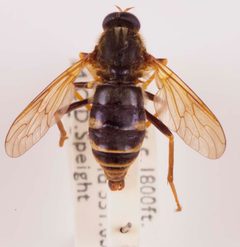
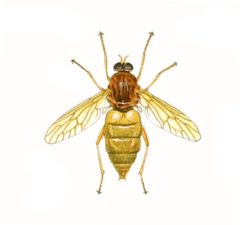
Coenomyia is a of flies in the Xylophagidae, commonly known as "stink flies." The genus contains at least four described , including the widespread Coenomyia ferruginea. These flies are characterized by their large size, brown coloration, and slow, clumsy movements. The family name Xylophagidae derives from Greek roots meaning "wood-eating," reflecting the larval in dead and decaying wood where they prey on wood-boring larvae.

Pronunciation
How to pronounce Coenomyia: /sɛnoʊˈmaɪə/
These audio files are automatically generated. While they are not always 100% accurate, they are a good starting point.
Identification
Coenomyia can be distinguished from similar large flies by its combination of large size, brown non-metallic coloration, broad flattened body, and slow, deliberate movements. The Xylophagidae was formerly treated as a of Rhagionidae (snipe flies), but is now recognized as distinct. Within Xylophagidae, Coenomyia is distinguished by its particular body form and antennal structure. The "stink fly" may refer to defensive secretions or odor associated with the insects, though this is not well-documented in available sources.
Images
Habitat
are found in wooded areas and forests. Larvae develop in dead and decaying wood, particularly in association with decaying hardwoods. The is associated with forested environments where suitable larval substrate (dead wood containing wood-boring larvae) is available.
Distribution
Records from Denmark (DK), Sweden (SE), Vermont (USA), and other parts of the United States. The has a Holarctic distribution, occurring in both the Palearctic and Nearctic regions. Coenomyia ferruginea has been recorded from Missouri, USA.
Seasonality
have been observed in spring; one record notes an individual seen on March 26. The exact period varies by and region, but activity appears to occur during warmer months when adults can be encountered on roads or other surfaces in forested areas.
Life Cycle
Larvae are thought to be or scavengers in dead and decaying wood, specifically preying on wood-boring larvae. This habit gives the its name (Xylophagidae = "wood-eaters," though the name more accurately describes their than their feeding , as they are predators rather than wood-feeders). apparently do not feed or have reduced feeding habits. occurs within the larval galleries in wood.
Behavior
are slow-moving and clumsy, often on the ground or roads rather than flying. When disturbed, they may eventually take , but their flight is described as slow and drifting. One observer noted that this slow movement can lull observers into thinking they can be easily captured, but they can escape when disturbed. Adults are primarily terrestrial in habit, not commonly seen on vegetation.
Ecological Role
Larvae function as of wood-boring insects, potentially helping to regulate of larvae that feed on dead wood. This places them within the guild of saproxylic (dead-wood dependent) insects that contribute to wood decomposition and nutrient cycling in forest . The is considered a sister group to Tabanidae (horse and deer flies), sharing ecological connections to forest and woodland .
Human Relevance
Minimal direct economic importance. are occasionally encountered by naturalists and entomologists due to their large size and distinctive appearance. The "stink fly" suggests they may produce defensive odors when handled, but specific interactions with humans are rarely documented. Not known to be pests or .
Similar Taxa
- Rhagionidae (snipe flies)Formerly classified as a within Rhagionidae; Xylophagidae was elevated to status. Snipe flies share the sister-group relationship and similar overall body plan but typically have more slender bodies, longer legs, and different wing venation.
- Tabanidae (horse and deer flies)Sister to Xylophagidae; share the infraorder Tabanomorpha. Tabanids are generally more robust with very large that often meet dorsally in males, and are blood-feeders as —ecologically very different from the predatory/scavenging larvae and non-blood-feeding adults of Xylophagidae.
- Bibionidae (March flies)Another of robust, brown flies that can appear -like. March flies have males with large and distinctive mating swarms; their larvae are soil-dwelling root feeders, not wood-associated .
- Scathophagidae (dung flies)Some large, brown scathophagids can resemble Coenomyia in general appearance, but they have different wing venation, more typical fly-like movements, and are associated with or decaying matter rather than dead wood.
More Details
Taxonomic History
The Xylophagidae was formerly treated as the Xylophaginae within Rhagionidae. Molecular and morphological studies supported its elevation to full family status. Coenomyia is the type of the subfamily Coenomyiinae within Xylophagidae.
Etymology
The name Xylophagidae derives from Greek xylon (wood) + phagein (to eat), though this is somewhat misleading as the larvae are of wood-boring insects rather than consumers of wood itself. The name Coenomyia may derive from Greek koinos (common) + myia (fly), or possibly from koilos (hollow) + myia, referencing the hollow galleries in wood where larvae develop.
Collection Notes
Due to their slow movements and terrestrial habits, can be captured by hand if approached carefully. However, they can take when disturbed, and their flight—while slow and drifting—can carry them into the where they are difficult to follow. Specimens should be preserved dry for proper curation.