
Coenomyia ferruginea
(Scopoli, 1763)
Stink Fly
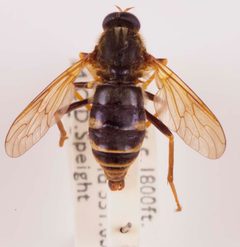
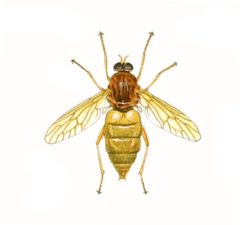
Coenomyia ferruginea, commonly known as the stink fly, is a of fly in the Xylophagidae. The family name derives from Greek roots meaning "wood-eating," referring to the larval habit of developing in dead and decaying wood. are large, brown, and slow-moving flies that can be mistaken for beetles at first glance. The species occurs across Europe and North America. Formerly classified as a of Rhagionidae (snipe flies), Xylophagidae is now recognized as a distinct family closely related to Tabanidae (horse and deer flies).

Identification
Coenomyia ferruginea can be distinguished from similar flies by its large size, brown coloration, and slow, clumsy movements that can cause it to be mistaken for a . The combination of robust body form and deliberate locomotion is distinctive among Diptera. It lacks the elongated body and rapid of snipe flies (Rhagionidae) and the large and biting mouthparts of horse flies (Tabanidae).
Images
Distribution
Europe and North America. Specific distribution records include Belgium, Denmark, and Sweden in Europe.
Behavior
exhibit slow, clumsy movements when , which can lull observers into complacency when attempting to capture them. They are capable of sudden , during which they drift slowly upward into the .
Similar Taxa
- Rhagionidae (snipe flies)Formerly classified together; distinguished by more elongated bodies and faster, more agile
- Tabanidae (horse and deer flies)Sister group relationship; distinguished by larger , biting mouthparts, and more robust