
Lipsanini
Genus Guides
7- Acrosticta
- Chaetopsis(picture-winged flies)
- Eumetopiella
- Euxesta(Cornsilk Flies)
- Notogramma
- Stenomyia
- Zacompsia
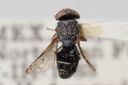
Lipsanini is a tribe of picture-winged flies (Diptera: Ulidiidae) distributed in South America. Members of the Aspistomella group of within this tribe exhibit distinctive facial : an enlarged, anteriorly produced epistome combined with a low , which contrasts with other lipsanine genera that have high clypei and unenlarged epistomes. Larvae of Aspistomella and Ulivellia are specialized for life in water-filled bamboo internodes (phytotelmata), where they feed saprophagously and exhibit aquatic adaptations including jumping in the last instar.

Pronunciation
How to pronounce Lipsanini: //ˌlɪpsəˈnaɪni//
These audio files are automatically generated. While they are not always 100% accurate, they are a good starting point.
Identification
Within Lipsanini, the Aspistomella group of (Aspistomella, Polyteloptera, Ulivellia) is distinguished by: enlarged epistome produced anteriorly; low ; differentiated short parafrontal setulae combined with long, strong frontal and interfrontal setae. Other lipsanine genera possess high clypei and unenlarged epistomes. Larvae are identifiable by unique and the structure of abdominal creeping welts.
Images
Habitat
Larvae of Aspistomella and Ulivellia inhabit water-filled internode cavities (phytotelmata) of living bamboo culms, specifically Guadua angustifolia. Last instar larvae exit to pupate in soil. The tribe as a whole is associated with various Poaceae plants.
Distribution
South America: Colombia, Peru, Bolivia, and Brazil.
Diet
Saprophagous. Larvae feed on decaying organic matter within water-filled bamboo internodes.
Host Associations
- Guadua angustifolia - larval Living bamboo culms; water-filled internode cavities
- Gynerium - associated plantWild cane; neotropical tall grass association
- Poaceae - associated plant Most of the larger monophyletic lineage including Chaetopsis, Amethysa, and Euphara relatives are associated with various Poaceae plants
- Crambidae - facultative associationLepidopteran borers; newly emerged larvae use tunnels made by caterpillars to penetrate hard bamboo walls. Not a food source.
Life Cycle
laid in bamboo. Larvae develop in water-filled internode cavities of living bamboo culms. Newly emerged larvae use tunnels made by Crambidae caterpillars to penetrate hard bamboo walls. Larvae are saprophagous and adapted to an aquatic lifestyle. Last instar larvae jump easily and exit bamboo to pupate in soil.
Behavior
Last instar larvae exhibit jumping to exit bamboo internodes. Larvae display aquatic adaptations for life in water-filled phytotelmata. Use of pre-existing lepidopteran borer tunnels represents a facilitative behavioral to overcome physical barriers of hard bamboo walls.
Ecological Role
Saprophagous decomposers in bamboo phytotelmata. Secondary invaders of herbaceous stems. Contributes to nutrient cycling within specialized microhabitats of living bamboo culms.
Similar Taxa
- Chaetopsis Loew, 1868 and related taxaShares synapomorphy of differentiated short parafrontal setulae and long, strong frontal and interfrontal setae; part of larger monophyletic lineage within Lipsanini
- Amethysa Macquart, 1835, Euphara Loew, 1868 and relativesShares synapomorphy of differentiated short parafrontal setulae and long, strong frontal and interfrontal setae; part of larger monophyletic lineage within Lipsanini; associated with Poaceae plants
- Other Lipsanini genera outside Aspistomella groupHigh and unenlarged epistome; Aspistomella group has enlarged, anteriorly produced epistome and low clypeus
More Details
Phytotelmata specialization
The aquatic larval lifestyle in bamboo internodes represents a remarkable ecological convergence with oriental Tephritidae, representing independent adaptations to similar microhabitats in different biogeographic regions.
Taxonomic history
Aspistomella Hendel, 1909 was established as a new senior subjective synonym of Paraphyola Hendel, 1909 in this revision.