
Trupanea
Schrank, 1795
Species Guides
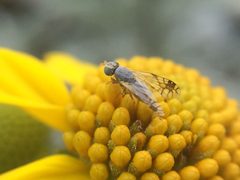
17Trupanea is a of tephritid fruit flies (Diptera: Tephritidae) established by Schrank in 1795. Recent taxonomic revisions have synonymized the genera Celidosphenella and Melanotrypana with Trupanea, transferring multiple to this genus. Species within Trupanea are primarily associated with Asteraceae plants, with larvae developing in flower . The genus has a broad geographic distribution including the Neotropical region, North America, Hawaii, Europe, and North Africa.
Pronunciation
How to pronounce Trupanea: /truːˈpeɪniə/
These audio files are automatically generated. While they are not always 100% accurate, they are a good starting point.
Identification
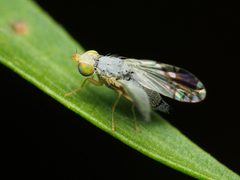
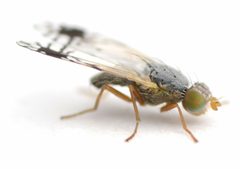
Members of Trupanea can be distinguished from related tephritid by wing pattern characteristics; several exhibit unusual wing patterns with distinct markings. The genus now encompasses species formerly placed in Celidosphenella and Melanotrypana, which were synonymized based on morphological analysis. Specific identification to species level requires examination of wing venation patterns and other morphological features detailed in taxonomic revisions.
Images
Habitat
Agricultural orchards containing fruit trees; natural associated with Asteraceae plants. Specific habitat preferences vary by and host plant availability.
Distribution
Neotropical Region (Argentina, Bolivia), North America (southern California), Hawaii, Europe (Denmark, Norway, Sweden), North Africa (Algeria). Distribution records span multiple continents with regional .
Host Associations
- Asteraceae - larval development in flower Primary plant for ; larvae develop within flower of various asteraceous plants
- Aphyllocladus spartioides - probable plantReported as probable for Trupanea dimorphica in Argentina
- Helianthus annuus - plantWild sunflower; confirmed for Trupanea bisetosa in southern California
- Dubautia raillardioides - plant Hawaiian Asteraceae shrub; for Trupanea dubautiae
Life Cycle
Larval development occurs within flower of plants. Specific details of , pupal, and stages vary by and require further study.
Behavior
are active in containing plants. Trupanea dubautiae has been observed to be unattractive to opiine (Fopius arisanus, F. caudatus, F. ceratitivorus) that attack other tephritid fruit flies, suggesting microhabitat specialization that provides protection from certain agents.
Ecological Role
Flower feeders on Asteraceae; larvae develop within plant inflorescences. May serve as non-target for programs targeting pest tephritids, with demonstrated resistance to attack by introduced opiine .
Human Relevance
Some occur in agricultural orchards and have been recorded in fruit fly monitoring programs. Trupanea amoena was recorded for the first time in Algeria in an agricultural area with apricot, fig, and grape plantings, highlighting the need for monitoring in agricultural contexts. Generally considered of lower economic importance than major fruit fly pests, but may be affected by programs targeting those pests.
Similar Taxa
- TephritisBoth are in Tephritidae with similar overall ; distinguished by wing pattern characteristics and larval associations
- CeratitisBoth are tephritid ; Ceratitis contains major agricultural pests (e.g., Mediterranean fruit fly) while Trupanea are primarily flower feeders on Asteraceae with different ecological roles
More Details
Taxonomic History
The has undergone significant recent revision. Celidosphenella Hendel, 1914 and Melanotrypana Hering, 1944 were synonymized with Trupanea, with eight transferred from Celidosphenella: Acinia bella, Acanthiophilus benoisti, Tephritis diespasmena, Celidosphenella maculata, Sphenella poecila, Trypanea simulata, Trupanea stonei, and Trypanea vidua.
Biological Control Implications
Trupanea dubautiae in Hawaii has been extensively studied as a non-target for of pest tephritids. -larval opiine Fopius arisanus, F. caudatus, and F. ceratitivorus do not attack this species, indicating minimal risk of non-target impact from these biological control agents on native Hawaiian Trupanea species.
Sources and further reading
- BugGuide
- Wikipedia
- GBIF taxonomy match
- iNaturalist taxon
- NCBI Taxonomy
- Catalogue of Life
- Notes on the Biology of Trupanea actinobola (Diptera: Tephritidae)
- New neotropical species of Trupanea (Diptera: Tephritidae) with unusual wing patterns
- Life History of Trupanea bisetosa (Diptera: Tephritidae) on Wild Sunflower in Southern California1
- Effect of Two Opiine Parasitoids (Hymenoptera: Braconidae) Introduced for Fruit Fly Control on a Native Hawaiian Tephritid,Trupanea dubautiae(Diptera: Tephritidae)
- Egg–larval opiine parasitoids (Hym., Braconidae) of tephritid fruit fly pests do not attack the flowerhead‐feeder Trupanea dubautiae (Dipt., Tephritidae)
- Diversity of fruit fly species in agricultural area Chott Zahrez Chergui (Djel-fa): First record of Trupanea amoena (Diptera: Tephritidae) in Algeria