
Euarestoides
Benjamin, 1934
Species Guides
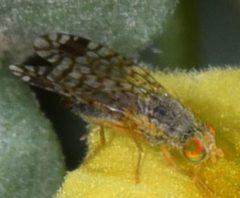
2Euarestoides is a of true fruit flies in the Tephritidae, established by Benjamin in 1934. The genus comprises six distributed across the New World, from Canada through the Caribbean and Central America to South America. Species are associated with plants in the Asteraceae family, particularly ragweeds (Ambrosia), sagebrushes (Hymenoclea), and related genera. The genus was revised taxonomically in 2019, with three new species described from Peru, Brazil, and Colombia.
Pronunciation
How to pronounce Euarestoides: /juːɑːrɛstoʊˈaɪdiːz/
These audio files are automatically generated. While they are not always 100% accurate, they are a good starting point.
Images
Distribution
New World: Bahamas, eastern Canada, USA, Chile, Colombia, Cuba, Dominican Republic, Ecuador, Mexico, Peru, Puerto Rico, Trinidad & Tobago, Venezuela, Guatemala, Brazil. Individual have more restricted ranges: E. abstersus (Bahamas, eastern Canada, USA); E. acutangulus (most widespread, Canada to South America); E. bimaculatus (Peru); E. dreisbachi (Guatemala, Mexico, Peru); E. pereirai (Brazil); E. rionegrensis (Colombia).
Host Associations
- Ambrosia acanthicarpa - ragweed
- Ambrosia confertiflora - ragweed
- Ambrosia dumosa - burrobush
- Ambrosia chenopodiifolia - ragweed
- Ambrosia eriocentra - ragweed
- Ambrosia ilicifolia - hollyleaf burweed
- Ambrosia psilostachya - Cuman ragweed
- Hymenoclea salsola - burrobrush
- Dicoria canescens - desert twinbugs
- Iva axillaris - povertyweed
- Baccharis halimifolia - eastern baccharis
- Baccharis neglecta - false willow
- Helianthus annuus - common sunflower
Similar Taxa
- EuarestaRelated in Tephritini with similar associations; Euarestoides distinguished by Benjamin in 1934 based on morphological characters
- NeotephritisAnother tephritine with Asteraceae ; -level identification requires examination of wing patterns and male genitalia
More Details
Taxonomic history
Originally described by Benjamin in 1934. The 2019 revision by Savaris & Norrbom provided the first comprehensive treatment, describing three new and clarifying plant associations based on literature records.
Host plant specificity
records compiled from multiple literature sources indicate strong but not exclusive association with Ambrosia and related Asteraceae . Specific -level host associations within Euarestoides remain incompletely documented.