
Euaresta
Loew, 1873
Species Guides
8- Euaresta aequalis(burr-seed fly)
- Euaresta bella(Common Ragweed Fruit Fly)
- Euaresta bellula
- Euaresta bullans(Spiny Cocklebur Fruit Fly)
- Euaresta festiva
- Euaresta stelligera
- Euaresta stigmatica
- Euaresta tapetis
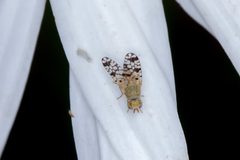
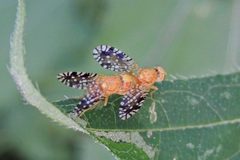
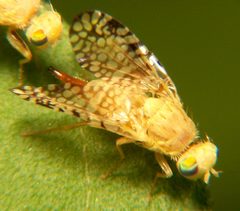
Euaresta is a of tephritid fruit flies comprising 15 to the Americas. The genus is specialized on plants in the genera Ambrosia, Xanthium, and Dicoria (Asteraceae), where larvae develop in flowers and seeds. Several species have been introduced outside their native ranges as agents for weeds. The genus was established by Loew in 1873.
Pronunciation
How to pronounce Euaresta: /juːəˈrɛstə/
These audio files are automatically generated. While they are not always 100% accurate, they are a good starting point.
Identification
Euaresta are distinguished from other tephritid by their association with Ambrosia, Xanthium, and Dicoria plants. A key to species is available through external taxonomic resources. Specific diagnostic morphological features for the genus are not documented in available sources.
Images
Habitat
Associated with plants in the Asteraceae Ambrosia, Xanthium, and Dicoria. These plants typically occupy disturbed , agricultural fields, and open areas. Specific microhabitat requirements vary by host .
Distribution
to the Americas. Eight native to North America, seven to South America. One specimen of E. toba collected in El Salvador. One or two species occur in the Antilles. Introduced established: E. bullans in California, Arizona, southern Europe, Middle East, South Africa, and Australia; E. aequalis in Fiji and Australia; E. bella released but not established in Europe.
Diet
Larvae feed on flowers and seeds of plants in the Ambrosia, Xanthium, and Dicoria. feeding habits are not documented in available sources.
Host Associations
- Ambrosia spp. - Larval development in flowers and seeds
- Xanthium spp. - Larval development in flowers and seeds; includes X. spinosum and X. strumarium for introduced
- Dicoria spp. - Larval development in flowers and seeds
Life Cycle
Complete with , larva, pupa, and stages. stages of E. stigmatica have been described from southern California, developing on Ambrosia spp. Specific duration of developmental stages is not documented in available sources.
Ecological Role
Specialized herbivores on Asteraceae plants. Some function as agents for weeds including spiny cocklebur (Xanthium spinosum), common cocklebur (Xanthium strumarium), and ragweed (Ambrosia artemisiifolia).
Human Relevance
Several have been intentionally or accidentally introduced as agents. E. aequalis was introduced to Fiji and Australia to control common cocklebur. E. bullans was accidentally introduced to multiple regions and attacks spiny cocklebur. E. bella was released in Europe for ragweed control but failed to establish. These introductions target economically significant agricultural weeds.
Similar Taxa
- Other Tephritidae generaEuaresta is distinguished by specialized association with Ambrosia, Xanthium, and Dicoria plants; other tephritids typically infest different host plant or plant parts
More Details
Taxonomic authority
established by Loew in 1873
Species diversity
Fifteen recognized ; key to species available through external taxonomic resources
Biological control history
Multiple introduction events documented: E. aequalis and E. bullans successfully established in introduced ranges; E. bella failed to establish in Europe despite release efforts