Euaresta aequalis
(Loew, 1862)
burr-seed fly
Euaresta aequalis is a North American fruit fly in the Tephritidae, commonly known as the burr-seed fly. It is a herbivore whose only known is the common cocklebur (Xanthium strumarium). Females possess large ovipositors adapted for penetrating the hard, spiny burr capsules to deposit . The was introduced to Australia in the 1930s as a agent for cocklebur but established only at low levels and proved ineffective. It is , with active from mid-July to mid-August.
Pronunciation
How to pronounce Euaresta aequalis: /juː.əˈrɛs.tə ɛˈkwɑː.lɪs/
These audio files are automatically generated. While they are not always 100% accurate, they are a good starting point.
Identification
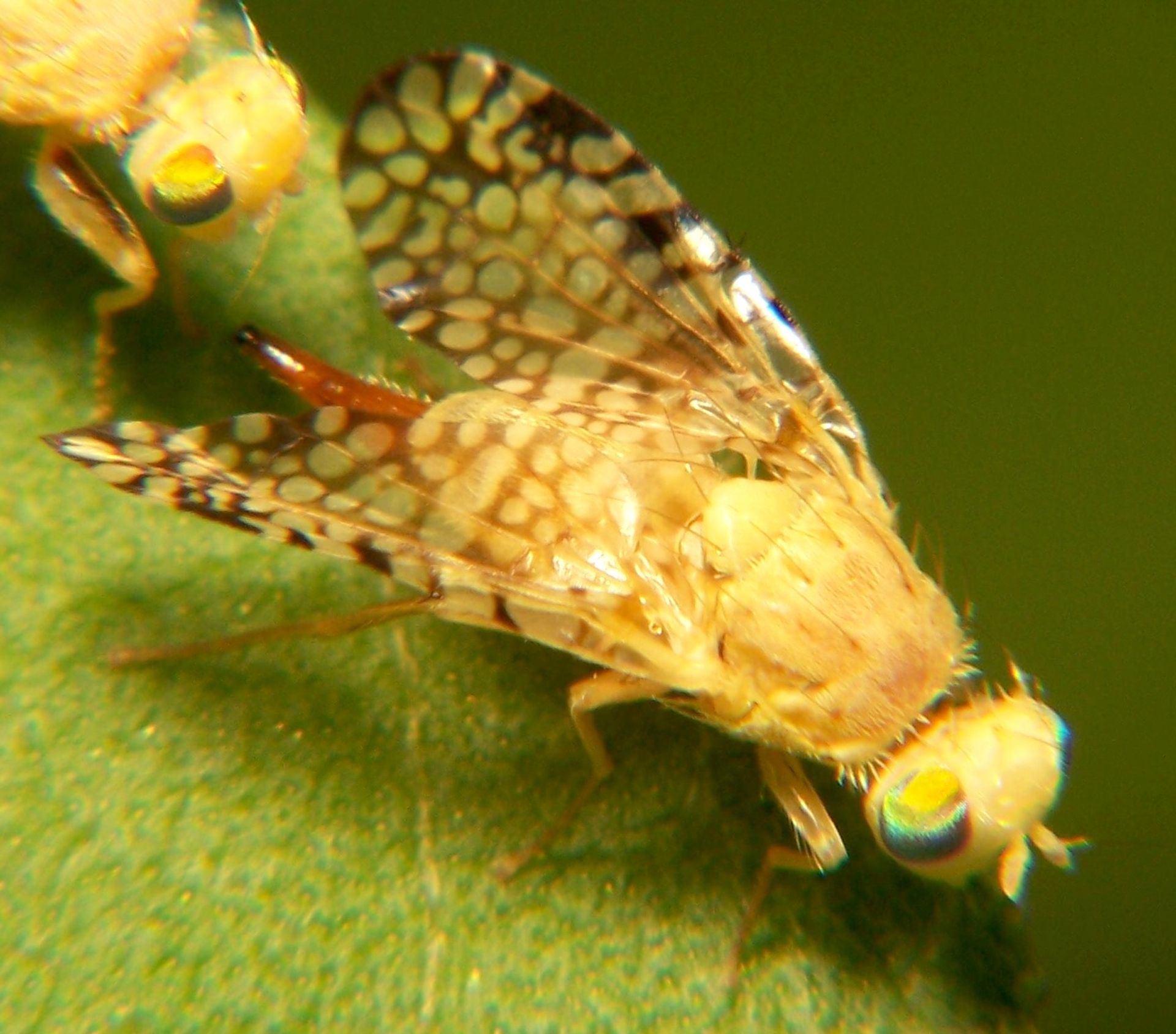
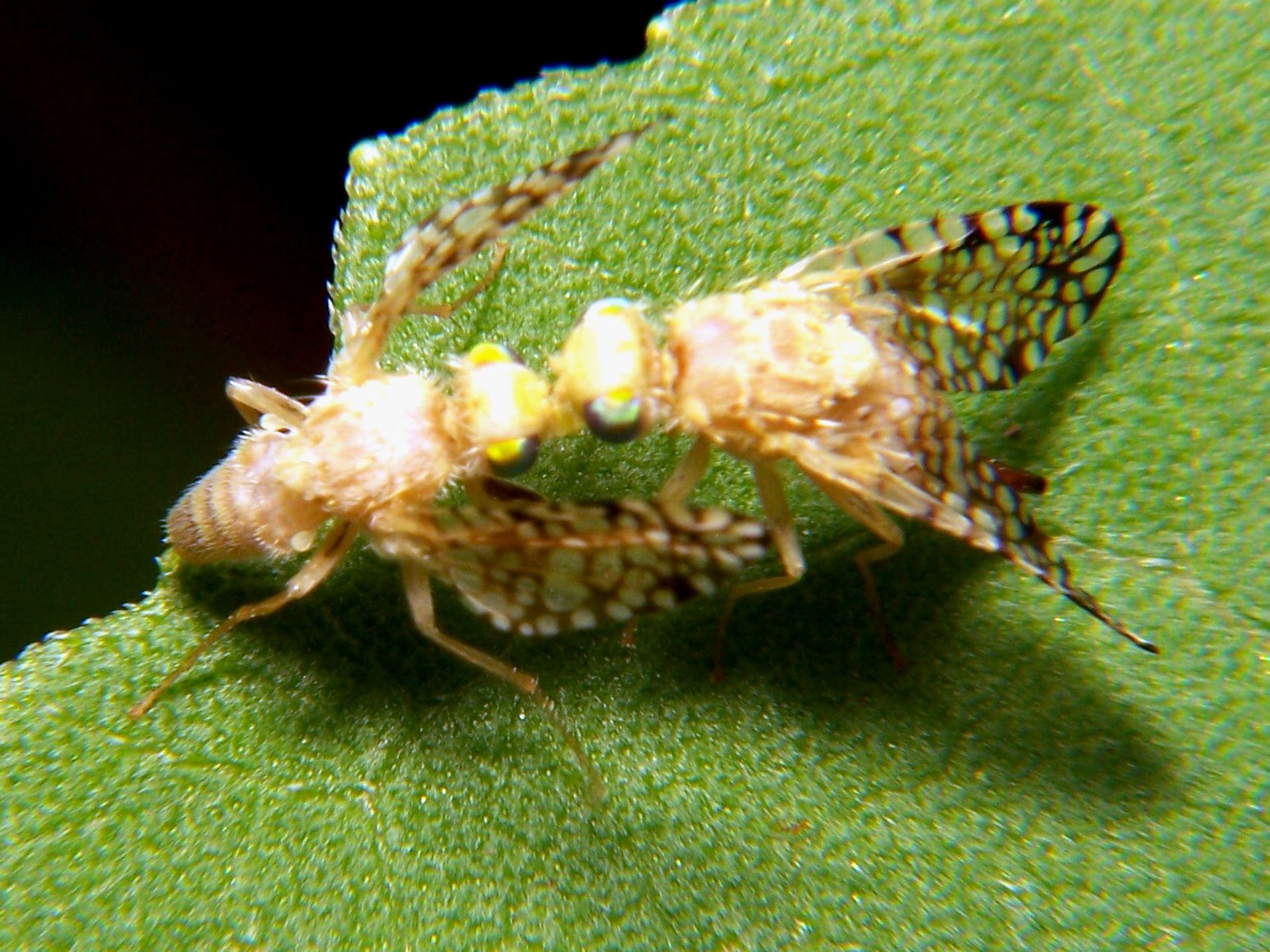
Distinguished from other North American Euaresta by its tan or yellow body color (all others except E. festiva are dark brown to black) and the clear round wing spot in r4+5 separated from the margin by a brown band. Largest species in the in North America.
Images
Appearance
Medium-sized fruit fly with tan to yellow body coloration and brilliant green . Wings display elaborate patterns characteristic of Tephritidae, with a diagnostic clear round spot in r4+5 separated from the wing margin by a distinct brown band. Generally the largest of the North American Euaresta .
Habitat
Associated with its plant Xanthium strumarium in disturbed , agricultural areas, and riparian zones where cocklebur grows.
Distribution
Widely distributed across the United States and southern Canada. First observed in Mexico in 1969 in Baja California. Introduced to Australia in the 1930s.
Seasonality
; period generally from mid-July to mid-August.
Diet
Larva feeds on seeds of Xanthium strumarium (common or rough cocklebur), typically consuming one of the two seeds within each burr capsule.
Host Associations
- Xanthium strumarium - obligate Only known ; larvae develop inside burr capsules feeding on seeds
Life Cycle
Females lay inside hard burr capsules of Xanthium strumarium using their large ovipositors. Larvae develop within the capsule, feeding on one of the two seeds. occurs within the burr. with one per year.
Behavior
Females use elongated ovipositors to penetrate spiny burr capsules for -laying. are active during mid-summer. In Australia, females have been observed toward prionic acid lures, suggesting possible cheater where non-calling females locate calling females to intercept males.
Ecological Role
seed of Xanthium strumarium. tightly linked to plant abundance. Serves as prey for .
Human Relevance
Introduced to Australia in 1932 as a agent for Noogoora burr (Xanthium strumarium), a serious pest of the wool industry. Establishment was limited and control was ineffective because larvae typically destroy only one of two seeds per burr. Superseded by an accidentally introduced rust fungus for control.
Similar Taxa
- Euaresta festivaOnly other North American Euaresta with light body coloration (tan/yellow rather than dark brown/black); distinguished by wing pattern details
- Other Euaresta speciesAll other North American have dark brown to black base coloration
More Details
Biological control history
Released in Queensland, Australia in 1932 alongside two stem-boring beetles and a tortricid . Failed to achieve effective control because larvae typically attack only one of two seeds per fruit, allowing high seed survival. Noogoora burr was eventually controlled by an accidentally introduced rust fungus.