
Urophora cardui
(Linnaeus, 1758)
Canada thistle gall fly, Thistle Stem Gall Fly
Urophora cardui is a tephritid fruit fly native to Central Europe, from the United Kingdom east to near the Crimea and from Sweden south to the Mediterranean. It has been introduced to North America as a agent for Canada thistle (Cirsium arvense), an weed. The forms stem galls on its plant and has been extensively studied for its genetics, patterns, and interactions with . Despite establishment in eastern Canada, its impact on host weed populations has remained limited.
Pronunciation
How to pronounce Urophora cardui: /ˌjʊəroʊˈfoʊrə ˈkɑːrdjuːaɪ/
These audio files are automatically generated. While they are not always 100% accurate, they are a good starting point.
Identification
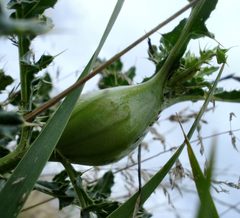
are small tephritid flies. The is distinguished by its association with stem galls on Cirsium arvense; galls appear as swollen, woody growths on thistle stems. Larvae create distinctive callus-filled exit channels during feeding. Molecular markers show high genetic variation with expected heterozygosity of 0.60–0.90 per locus across .
Images
Habitat
Associated with Canada thistle (Cirsium arvense) stands. Successful establishment requires with sufficient spring moisture from melting snow and rainfall to disintegrate callus plugs blocking gall exit channels. Habitats with insufficient moisture impair and colony viability.
Distribution
Native to Central Europe: United Kingdom east to near Crimea, Sweden south to Mediterranean. Introduced to North America (Canada and northern United States) beginning in 1974 for . Established in Ontario, Quebec, and New Brunswick; largely failed in western Canada except one location. in Finland (1985–1991) reached 37–55 km from introduction point within six years, with spread strongly correlated with summer warmth.
Seasonality
laid during plant growing season. Larvae overwinter in galls as third instars. occurs in early spring for 24–35 days. emerge when spring moisture disintegrates callus plugs. In Finland, distance correlated with summer temperature: up to 16 km expansion in warm summers, contraction in cold summers.
Diet
Larvae feed internally on gall tissue of Cirsium arvense. do not feed before ; specific adult diet not documented.
Host Associations
- Cirsium arvense - obligate plant for gall formation and larval developmentCanada thistle or creeping thistle; weed in North America
- Cirsium vulgare - occasional oviposition under deprivation conditionsclosely related weed; not primary
- Carduus acanthoides - occasional oviposition under deprivation conditionsclosely related weed; not primary
- Eurytoma serratulae - endoparasitoidcomplementary exploitation strategy with E. robusta
- Eurytoma robusta - ectoparasitoidprimary ; modal distribution one larva per gall; rates up to 70% initially but declined suddenly in monitored
Life Cycle
Females lay 1–30 on thistle stems during growing season. Eggs hatch in approximately 4.3 days at 27°C. Larvae burrow into stems and induce gall formation, growing to 98% of body weight. Larvae create callus-filled channels during feeding that serve as adult exit routes. Third instar larvae overwinter in galls. occurs in early spring for 24–35 days; pupae appear reddish-brown. Adults chew through disintegrated callus to exit galls. Gall formation reduces host plant root weight by 65–78% and stem-leaf weight by 47–58% compared to ungalled plants.
Behavior
Larvae exhibit gregarious feeding within galls. rates of 1–2 orders of magnitude higher than previously assumed (exceeding 100 m per ). Newly founded colonies typically small with high extinction rates. Colony viability does not correlate with distance from dispersal center. do not feed or reproduce until fat reserves from larval stage are exhausted.
Ecological Role
Gall-former on Cirsium arvense; creates structure for Eurytoma serratulae and Eurytoma robusta. Reduces plant vigor through resource diversion to gall tissue. Acts as host in specialized parasitoid . High genetic connectivity suggests role in maintaining across fragmented host plant .
Human Relevance
Introduced to North America as agent for Canada thistle beginning 1974. Despite establishment in eastern Canada, impact on weed described as slight. Used as model organism for studying post-glacial range expansion, parapatric diversification, and - . sequenced (2024) as part of Darwin Tree of Life project.
Similar Taxa
- Urophora stylataSister ; microsatellite markers show partial cross-amplification success; both form galls on thistles but on different species and plant parts
- Ceutorhynchus lituraCo-occurring biocontrol agent for Canada thistle; combined attack with U. cardui reduces plant vigor more than either alone
Sources and further reading
- BugGuide
- Wikipedia
- GBIF taxonomy match
- iNaturalist taxon
- NCBI Taxonomy
- The Bee and the Butterfly | Bug Squad
- The Migratory Painted Lady and a UC Davis Chancellor's Postdoctoral Fellow | Bug Squad
- Of Butterfly Patterns and Genetic Codes | Bug Squad
- Painted Ladies on the Move | Bug Squad
- A Flash of Orange: Welcome, California Tortoiseshell! | Bug Squad
- Two Insect Contests: One Winner, One to Go | Bug Squad
- Dispersal of the thistle gallfly Urophora cardui and its endoparasitoid Eurytoma serraiulae (Hymenoptera: Eurytomidae)
- EXIT STRATEGY OF UROPHORA CARDUI (DIPTERA: TEPHRITIDAE) FROM ITS GALL ON CANADA THISTLE
- Parapatric diversification after post‐glacial range expansion in the gall flyUrophora cardui(Tephritidae)
- Genetic differentiation of the tephritid fly Urophora cardui in Europe as evidence for its biogeographical history
- Distribution and dispersal of <i>Urophora cardui</i> (Diptera, Tephritidae) in Finland in 1985-1991
- Comparative population genetic structures of the fruit fly Urophora cardui and its primary parasitoid Eurytoma robusta
- Figure 10 from: Zwölfer H, Böheim M, Beck E (2015) Eurytoma serratulae and E. robusta (Hymenoptera, Eurytomidae): complementary host exploitation strategies of coexisting parasitoids and their impact on the host Urophora cardui. Journal of Hymenoptera Research 42: 47-62. https://doi.org/10.3897/JHR.42.8847
- Figure 9 from: Zwölfer H, Böheim M, Beck E (2015) Eurytoma serratulae and E. robusta (Hymenoptera, Eurytomidae): complementary host exploitation strategies of coexisting parasitoids and their impact on the host Urophora cardui. Journal of Hymenoptera Research 42: 47-62. https://doi.org/10.3897/JHR.42.8847
- Figure 7 from: Zwölfer H, Böheim M, Beck E (2015) Eurytoma serratulae and E. robusta (Hymenoptera, Eurytomidae): complementary host exploitation strategies of coexisting parasitoids and their impact on the host Urophora cardui. Journal of Hymenoptera Research 42: 47-62. https://doi.org/10.3897/JHR.42.8847
- Establishment of Urophora cardui (Diptera: Tephritidae) on Canada Thistle, Cirsium arvense (Asteraceae), and Colony Development in Relation to Habitat and Parasitoids in Canada
- Characterisation of microsatellite and SNP markers from Miseq and genotyping-by-sequencing data among parapatric Urophora cardui (Tephritidae) populations
- HOST SPECIFICITY AND BIOLOGY OFUROPHORA CARDUI(DIPTERA: TEPHRITIDAE). A BIOCONTROL AGENT FOR CANADA THISTLE (CIRSIUM ARVENSE)
- BIOCONTROL OF THE WEED CANADA THISTLE (CIRSIUM ARVENSE): RELEASES AND DEVELOPMENT OF THE GALL FLY UROPHORA CARDUI (DIPTERA: TEPHRITIDAE) IN CANADA
- Larval distributions of the ectoparasitoid wasp Eurytoma robusta relative to the host tephritid gall fly Urophora cardui
- EFFECT OF UROPHORA CARDUI (L.) (DIPTERA: TEPHRITIDAE) AND CEUTORHYNCHUS LITURA (F.) (COLEOPTERA: CURCULIONIDAE) ON THE WEED CANADA THISTLE, CIRSIUM ARVENSE (L.) SCOP.
- The genome sequence of the thistle gall fly, Urophora cardui (Linnaeus 1758).
- Predatory and Parasitic Insects Associated with Urophora cardui L. (Diptera: Tephritidae) Galls on Canada Thistle, Cirsium arvense L. (Asterales, Asteraceae) in North Dakota.