
Myopitini
Genus Guides
3- Goedenia
- Rhynencina
- Urophora(thistle gall flies)
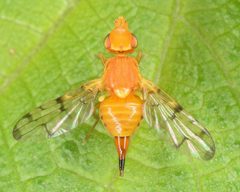
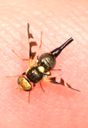
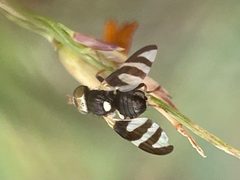
Myopitini is a tribe of fruit flies within the Tephritidae, Tephritinae. The tribe comprises approximately eleven , including the well-known genus Urophora. Members are small to medium-sized flies, many of which are associated with plants in the family Asteraceae. The tribe has a primarily Palearctic distribution with some genera extending into other regions.
Pronunciation
How to pronounce Myopitini: /maɪˌɒpɪˈtaɪni/
These audio files are automatically generated. While they are not always 100% accurate, they are a good starting point.
Identification
Myopitini can be distinguished from other Tephritinae tribes by wing venation patterns and male genitalia structure. Many exhibit characteristic dark wing markings or bands. The Urophora, the largest in the tribe, is recognized by its distinctive wing pattern with dark crossbands and often spotted . Separation from closely related tribes such as Tephritini requires examination of the surstyli and epandrium in males.
Images
Distribution
Primarily Palearctic in distribution, with the Urophora also occurring in the Nearctic region. Some genera such as Asimoneura and Rhynencina have more restricted ranges in Europe and Asia. The tribe is absent from the Australian and Neotropical regions except for introduced of certain Urophora .
Host Associations
- Asteraceae - larval plantMany Myopitini are associated with Asteraceae, with larvae developing in flower or stems. Urophora species are known to form galls in Asteraceae capitula.
- Campanulaceae - larval plantSome have been recorded from Campanulaceae.
Human Relevance
Some Urophora have been introduced to North America as agents against Asteraceae weeds, particularly knapweeds (Centaurea species). These introductions have had mixed success and in some cases have affected non-target native plants.
Similar Taxa
- TephritiniBoth tribes belong to Tephritinae and share similar body plans and wing patterns. Distinguished by male genitalia and larval associations.
- NoeetiniAnother tribe within Tephritinae with overlapping morphological features. Myopitini typically have more complex wing patterns and different antennal structure.
More Details
Genera included
Myopitini contains the following accepted : Asimoneura, Goedenia, Inuromaesa, Myopites, Myopitora, Neomyopites, Rhynencina, Spinicosta, Stamnophora, and Urophora. The status of Eurasimona remains unclear, having been originally described as a subgenus of Urophora.
Gall formation
in the Urophora are notable for inducing galls in the flower of Asteraceae. These galls provide protected environments for larval development and represent a specialized form of plant-insect interaction within the tribe.