
Eurosta comma
(Wiedemann, 1830)
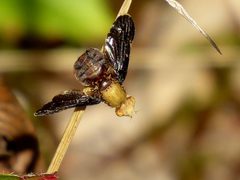
Eurosta comma is a tephritid fruit fly that forms rhizome galls on goldenrod plants (Solidago missouriensis). As a rhizome-galling , it diverts host plant resources toward root tissue and away from vegetative growth, significantly reducing the host's ability to produce new rhizomes. The interacts indirectly with other herbivores such as the leaf beetle Trirhabda canadensis by impairing the host plant's capacity to recover from defoliation.
Pronunciation
How to pronounce Eurosta comma: /juːˈrɒstə ˈkɒmə/
These audio files are automatically generated. While they are not always 100% accurate, they are a good starting point.
Images
Habitat
Associated with goldenrod (Solidago missouriensis) in where this plant occurs. Specific habitat conditions beyond host presence have not been documented.
Distribution
United States; recorded from Vermont and other U.S. locations.
Host Associations
- Solidago missouriensis - rhizome gall inducerForms galls on rhizomes; galled ramets show altered resource allocation with reduced leaf/stem mass and increased root mass
Behavior
Induces gall formation on plant rhizomes. Galled ramets allocate significantly more resources to roots and less to leaves and stems compared to ungalled ramets. The presence of galls reduces the host plant's ability to initiate new rhizomes and recover from defoliation damage.
Ecological Role
Herbivore that modifies plant resource allocation patterns and reduces vegetative in Solidago missouriensis. Creates indirect competitive effects on co-occurring folivores by compromising host plant .
Similar Taxa
- Eurosta solidaginisBoth are Eurosta that form galls on goldenrod (Solidago), but E. solidaginis produces spherical stem galls rather than rhizome galls
- Trirhabda canadensisShares plant Solidago missouriensis and interacts indirectly; however, T. canadensis is a leaf-feeding beetle (Chrysomelidae) rather than a gall-forming fly
Sources and further reading
- BugGuide
- Wikipedia
- GBIF taxonomy match
- iNaturalist taxon
- NCBI Taxonomy
- Catalogue of Life
- How Some Insects Turn Plants Into Pollution Detectors
- Friday Editor’s Tip: Lose the formatting! | Beetles In The Bush
- Bug Eric: Emerald Valley, 2016
- Navy Entomologists: Protecting Sailors and Marines Around the World
- [No taxon] | Beetles In The Bush | Page 5
- Athlete to Professor: How One Entomologist Discovered His Interest in Bugs, Education, and Service
- Direct and indirect effects of two herbivore species on resource allocation in their shared host plant: the rhizome galler Eurosta comma , the folivore Trirhabda canadensis and Solidago missouriensis