
Hybomitra minuscula
(Hine, 1907)
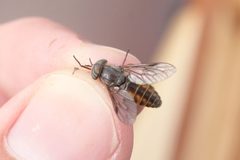
Hybomitra minuscula is a of horse fly in the Tabanidae, originally described as Tabanus minusculus by Hine in 1907. It belongs to the Hybomitra, a diverse group of biting flies distributed primarily in the Holarctic region. Like other tabanids, are likely to be blood-feeding, though specific ecological details for this species remain poorly documented. The species has been recorded in North America.
Pronunciation
How to pronounce Hybomitra minuscula: /ˌhaɪbəˈmaɪtrə maɪˈnʌskjʊlə/
These audio files are automatically generated. While they are not always 100% accurate, they are a good starting point.
Identification
Distinguishing Hybomitra minuscula from requires examination of wing venation, abdominal patterning, and genitalia. The small number of iNaturalist observations (6 records) suggests it is either rare, underreported, or difficult to identify in the field. No published identification keys specifically referencing this were found in the provided sources.
Images
Appearance
As a member of Tabanidae, possess large that often meet at the top of the in males and are separated in females. The body is robust with a broad . Hybomitra typically show patterned or banded wings and often have brightly colored or iridescent . Specific diagnostic features for H. minuscula have not been documented in available sources.
Distribution
North America; specific range details beyond continental occurrence are not established in available sources. The basionym and original description by Hine (1907) suggest a North American type locality.
Similar Taxa
- Hybomitra affinisOverlapping North American distribution and similar size; requires examination of abdominal patterning and wing shading for separation.
- Hybomitra lasiophthalmaShares preferences and seasonal activity; distinguished by differences in coloration in live specimens and structural details of the terminalia.
More Details
Taxonomic history
Transferred from Tabanus to Hybomitra, reflecting modern classification of the tribe Tabanini. The specific epithet 'minuscula' (meaning 'very small') may refer to its relatively small size compared to other horse flies, though this interpretation is speculative.
Data deficiency
With only 6 iNaturalist observations and no Wikipedia entry, this represents a significant gap in publicly available natural history information. Basic biological parameters— associations, larval , , and geographic range—remain undocumented in accessible literature.