
Xanthogramma
Schiner, 1860
Harlequin Flies
Species Guides
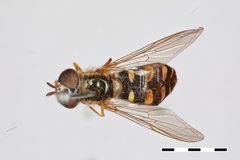
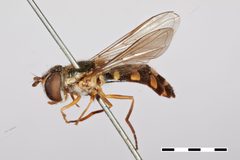
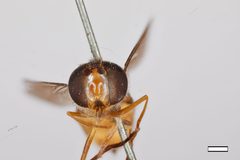
1Xanthogramma is a of medium-sized hoverflies (Syrphidae) commonly known as harlequin flies. Most exhibit black and yellow coloration with somewhat -like appearance. Larvae are aphidophagous , feeding on in agricultural and natural . visit flowers but do not share the predatory habits of larvae. The genus occurs across the Palaearctic region including Europe, Asia, and North Africa.
Pronunciation
How to pronounce Xanthogramma: /ˌzænθəˈɡræmə/
These audio files are automatically generated. While they are not always 100% accurate, they are a good starting point.
Images
Habitat
Agricultural areas with cultivated plants infested by aphids; found on flowers or hovering among vegetation. Larvae associated with nests where root prey occur.
Distribution
Palaearctic region: Europe, Asia, and North Africa (Morocco, Tunisia, Algeria, India including Delhi, Meerut, Saharanpur, Bulandshahr, Agra, and Gujarat). Records from Denmark, Norway, and Sweden.
Seasonality
active from May to June (documented for X. africana); broader seasonal patterns for not established.
Diet
Larvae feed on aphids: documented prey includes Aphis persicae on peach, Lipaphis erysimi on cabbage, and Toxoptera graminum on wheat. Root aphids are suspected prey for larvae in nests. do not feed on aphids.
Life Cycle
Larval stage rarely observed and poorly understood; specific developmental stages not documented.
Behavior
Larvae are predatory; hover among vegetation and visit flowers. One of the most common in agricultural regions of northern India.
Ecological Role
agent of pests in agricultural ; pollination services by flower visitation.
Human Relevance
Used in of pests on crops including peach, cabbage, and wheat.
Sources and further reading
- BugGuide
- GBIF taxonomy match
- iNaturalist taxon
- Catalogue of Life
- Sexual behaviour of a gynandromorphic spider of Carrhotus xanthogramma (Araneae: Salticidae).
- The Bionomics of the Syrphid Fly, Xanthogramma Scutellare Fab. (Syrphidae: Diptera)
- Revision of the North African Hoverflies of the Genus Xanthogramma Schiner, 1861 (Diptera: Syrphidae), with Description of a New Species.