
Ocyptamus antiphates
(Walker, 1849)
Stubby Hover Fly
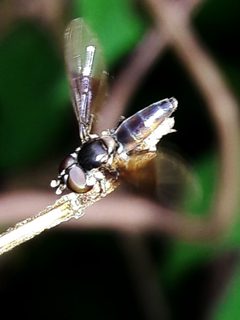
Ocyptamus antiphates is a of hover fly in the Syrphidae, distributed across much of South America. The species belongs to the tribe Syrphini and is part of a diverse containing over 140 Neotropical species. It has been recorded visiting flowers, including mallow species. As with other Ocyptamus species, it may exhibit wing markings that help distinguish it from similar genera such as Pseudodoros and Baccha.
Pronunciation
How to pronounce Ocyptamus antiphates: //oʊˈsɪptəməs ænˈtɪfətiːz//
These audio files are automatically generated. While they are not always 100% accurate, they are a good starting point.
Identification
Ocyptamus can be distinguished from the similar Pseudodoros by the presence of at least faint dark markings on the wings, often appearing as a bold leading edge. They differ from Baccha, which can be more difficult to separate but includes species with distinctly banded . Within Ocyptamus, precise identification to species level requires examination of characters on the lateral and portions of the , which are not visible in standard photographs.
Images
Appearance
Distribution
Widely distributed across South America. GBIF records indicate presence throughout Brazil, including states: Acre, Alagoas, Amazonas, Amapá, Bahia, Ceará, Distrito Federal, Espírito Santo, Goiás, Maranhão, Minas Gerais, Mato Grosso do Sul, Mato Grosso, Pará, Paraíba, Pernambuco, Piauí, Paraná, Rio de Janeiro, Rio Grande do Norte, Rondônia, Roraima, Rio Grande do Sul, Santa Catarina, Sergipe, São Paulo, and Tocantins. Also recorded from Norway (likely vagrant or data error).
Behavior
Has been observed visiting flowers, including Sphaeralcea bonariensis (mallow ). As with other syrphid flies, are likely frequent flower visitors.
Ecological Role
likely contribute to pollination as flower visitors. Larval is unknown for this , though related Ocyptamus species have predatory larvae.
Similar Taxa
- Pseudodoros clavatusSimilar -mimicking appearance, but Ocyptamus has at least faint dark wing markings (often bold leading edge) while Pseudodoros lacks these markings.
- BacchaDifficult to distinguish; some Baccha have distinctly banded not seen in Ocyptamus.
- Episyrphus balteatusSuperficially similar coloration, but this is an Old World not occurring in South America; distinguished by secondary 'moustache'-like black bands on the 3rd and 4th abdominal .
- ToxomerusSimilar tribe (Syrphini) and Neotropical distribution; Toxomerus contains over 144 Neotropical and requires detailed examination for separation.
- AllograptaSuggested as possible confusion ; belongs to same tribe but requires examination of thoracic characters for proper identification.
More Details
Taxonomic note
Ocyptamus is a large and relatively understudied in the Neotropics. -level identification often requires examination of characters not visible in standard photographs.