
Eupeodes pomus
(Curran, 1921)
Short-tailed Aphideater
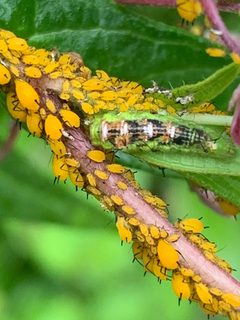
Eupeodes pomus, commonly known as the short-tailed aphideater, is a of syrphid fly distributed across North America. are flower-visiting insects that feed on nectar and pollen, while larvae are . The species belongs to a noted for -mimicking appearance and hovering .
Pronunciation
How to pronounce Eupeodes pomus: //juːˈpiː.oʊdiːz ˈpoʊməs//
These audio files are automatically generated. While they are not always 100% accurate, they are a good starting point.
Identification
Distinguished from bees and by: (1) only one pair of wings versus two pairs in Hymenoptera, (2) short versus longer, often elbowed antennae in bees and wasps, (3) hovering capability, and (4) an extendable with a sponge-like tip rather than chewing . Separated from other syrphid by subtle morphological features of the and male genitalia; -level identification requires examination of these structures.
Images
Appearance
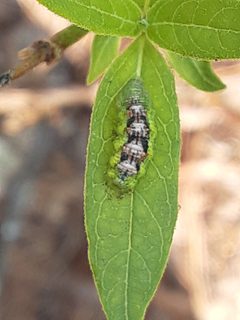
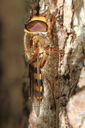
exhibit the typical syrphid fly : large that meet at the top of the in males and nearly meet in females, short , and a single pair of wings (the hindwings reduced to ). The body shows - or -mimicking coloration. Larvae are maggot-like, soft-bodied, and cryptically colored to blend with foliage.
Habitat
Found in gardens, agricultural areas, and natural vegetation where flowering plants and colonies co-occur. frequent flowers for feeding; larvae occur on vegetation supporting aphid .
Distribution
North America, with records from the United States including Vermont.
Seasonality
are especially conspicuous in spring and fall when peak. Activity patterns follow seasonal availability of flowers and aphid prey.
Diet
feed on nectar and pollen from flowers. Larvae are of aphids.
Life Cycle
Females lay in or near colonies. Larvae pass through three instars, feeding on aphids, before pupating. The pupa is a convex, pear-shaped structure attached to leaves or stems. emerge from this pupal case.
Behavior
are capable of hovering , remaining nearly motionless in the air. They visit flowers for nectar and pollen, serving as . Larvae are cryptic, often resembling discolored patches on leaves or shed plant material.
Ecological Role
Larvae function as agents of . contribute to pollination of flowering plants.
Human Relevance
Considered beneficial in gardens and agriculture due to larval on pests. are harmless that do not sting.
Similar Taxa
- Allograpta speciesSimilar syrphine hoverflies with -feeding larvae; distinguished by abdominal pattern and male genitalia.
- Syrphus speciesClosely related with similar -mimicking appearance; separation requires detailed morphological examination.
- Toxomerus speciesSmall syrphid flies with similar flower-visiting ; generally smaller with different abdominal markings.
- Bees and wasps (Hymenoptera)Convergent mimics distinguished by wing number, structure, mouthparts, and .
Misconceptions
Larvae are frequently mistaken for plant-feeding caterpillars or pests and may be inadvertently killed during control efforts. The -like appearance of leads to unnecessary fear of stinging, though syrphid flies are entirely harmless.