
Pyrophaena
Schiner, 1860
Species Guides
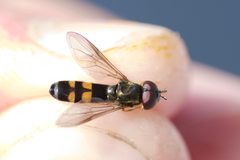
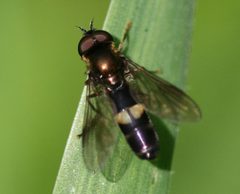
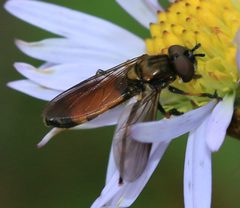
2- Pyrophaena granditarsis(Hornhand Sedgesitter)
- Pyrophaena rosarum(Fourspot Sedgesitter)
Pyrophaena is a of hoverflies ( Syrphidae) established by Schiner in 1860. Historically treated as a subgenus of Platycheirus, it has been elevated to generic status by some authorities. Phylogenetic studies indicate closer relationships to the genera Rohdendorfia, Syrphocheilosia, and Spazigaster than to the remainder of Platycheirus, though broader taxonomic sampling is needed to confirm its systematic placement.
Pronunciation
How to pronounce Pyrophaena: /paɪrəˈfiːnə/
These audio files are automatically generated. While they are not always 100% accurate, they are a good starting point.
Identification
Pyrophaena have been distinguished from Platycheirus sensu stricto based on morphological characters, though specific diagnostic features are not detailed in available sources. The contains two recognized species: Platycheirus granditarsus and Platycheirus rosarum, which retain their original species epithets under the alternative classification.
Images
Distribution
Recorded from Denmark (DK), Norway (NO), and Sweden (SE) based on GBIF distribution data. The full geographic range is incompletely documented.
Similar Taxa
- PlatycheirusPyrophaena has been treated historically as a subgenus of Platycheirus; the two share general hoverfly but differ in phylogenetic affinities and subtle morphological characters.
- RohdendorfiaPhylogenetic analysis places Pyrophaena closer to Rohdendorfia than to the core Platycheirus lineage.
- SyrphocheilosiaPhylogenetic analysis indicates a close relationship between Pyrophaena and Syrphocheilosia within the Syrphinae.
- SpazigasterMolecular phylogenetic studies group Pyrophaena with Spazigaster rather than with Platycheirus sensu stricto.
More Details
Taxonomic status
The elevation of Pyrophaena from subgenus to remains provisional. The Catalogue of Life recognizes Pyrophaena as an accepted genus, while GBIF treats it as a higher-rank match, reflecting ongoing taxonomic uncertainty. A comprehensive phylogenetic survey of Platycheirus and related genera is needed to resolve its definitive classification.
Included species
Two are currently associated with Pyrophaena: Platycheirus granditarsus (Forster, 1771) and Platycheirus rosarum (Fabricius, 1787). These species were originally described under Platycheirus and have not been formally recombined under Pyrophaena in all taxonomic treatments.