
Pyrophaena granditarsis
Hornhand Sedgesitter
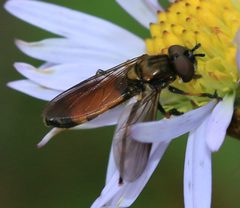
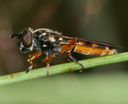
Pyrophaena granditarsis is a small hoverfly in the Syrphidae, commonly known as the Hornhand Sedgesitter. The is recognized by its distinctive enlarged hind in males. It is associated with wetland , particularly sedge-dominated areas. The species has been documented across northern temperate regions with 463 iNaturalist observations.
Pronunciation
How to pronounce Pyrophaena granditarsis: //ˌpaɪrəˈfiːnə ˌɡrændɪˈtɑːrsɪs//
These audio files are automatically generated. While they are not always 100% accurate, they are a good starting point.
Identification
Males possess conspicuously enlarged hind , a trait reflected in the specific epithet 'granditarsis' (large tarsi). This feature distinguishes P. granditarsis from and most other small syrphid flies. Females lack this modification and are more difficult to identify, requiring examination of subtle characters. The is small-bodied with the general typical of the Bacchini tribe.
Images
Habitat
Wetland environments, particularly sedge meadows, marshes, and riparian zones with emergent vegetation.
Distribution
Northern temperate regions; documented across Europe and North America.
Ecological Role
are likely of wetland flora. Larval is poorly documented but Bacchini larvae are generally aphidophagous, suggesting potential role in in wetland systems.
Similar Taxa
- Pyrophaena rosarumSimilar small size and wetland association; distinguished by male tarsal structure and subtle coloration differences
- Other Bacchini genera (e.g., Melanostoma, Platycheirus)Overlap in size and general ; requires examination of male genitalia and tarsal characters for definitive identification