
Pyrophaena rosarum
(Fabricius, 1787)
Fourspot Sedgesitter
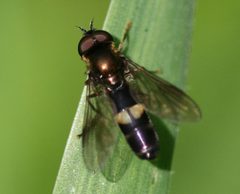
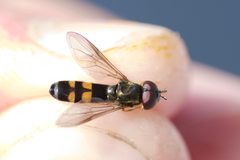
Pyrophaena rosarum is a small hoverfly (Syrphidae) known as the Fourspot Sedgesitter. The is characterized by distinctive abdominal markings and is associated with wetland vegetation, particularly sedges. It occurs across parts of Europe including Belgium, where it has been documented in multiple regions. are active during spring and early summer.
Pronunciation
How to pronounce Pyrophaena rosarum: /paɪˌroʊˈfiːnə ˈrɒsærəm/
These audio files are automatically generated. While they are not always 100% accurate, they are a good starting point.
Identification
Distinguished from similar Pyrophaena by the four-spotted abdominal pattern. P. granditarsa has different leg coloration and abdominal markings. Other small spotted hoverflies in tribe Bacchini can be separated by wing venation details and abdominal spot arrangement. Examination of male genitalia may be required for definitive identification in some cases.
Images
Appearance
Habitat
Wetland including fens, marshes, and edges of ponds and lakes. Strongly associated with stands of sedges (Carex ) and other emergent vegetation. Requires moist to wet conditions with undisturbed vegetation structure.
Distribution
Europe. Documented in Belgium (Flanders, Brussels-Capital Region, Walloon Region). Distribution likely extends to other parts of northwestern and central Europe, though specific records require verification.
Seasonality
active from April to June, with peak activity in May. Single per year in temperate regions.
Life Cycle
Larval development occurs in moist soil or decaying organic matter at base of sedges. Larvae are likely predatory on small , as is typical for Bacchini, though specific prey records for this are not documented. occurs in soil or litter.
Behavior
frequently rest on sedge leaves and stems, reflected in the 'Sedgesitter'. Males hover in small territories near vegetation. is low and weaving among plant stems rather than open hovering.
Ecological Role
may contribute to pollination of wetland plants. Larval , if confirmed, would provide regulation of small soil .
Human Relevance
No significant direct interactions with humans. May serve as for healthy wetland .
Similar Taxa
- Pyrophaena granditarsaOverlapping distribution and similar size; distinguished by enlarged male fore and different abdominal pattern
- Melanostoma scalareSimilar small size and spotted ; differs in thoracic coloration and wing venation details
More Details
Taxonomic history
Originally described by Fabricius in 1787. The Pyrophaena was historically treated as a synonym of Melanostoma but is now recognized as distinct based on morphological and molecular data.