
Platycheirus stegnus
(Say, 1829)
Greater Punctate Sedgesitter
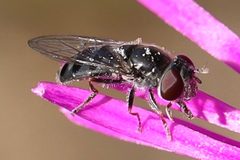
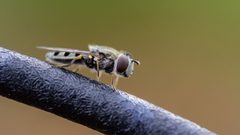
Platycheirus stegnus is a hoverfly (Syrphidae) commonly known as the Greater Punctate Sedgesitter. It belongs to a characterized by elongated legs and distinctive wing venation. Like other syrphids, are likely nectar feeders, though specific ecological details remain poorly documented. The was described by Thomas Say in 1829.
Pronunciation
How to pronounce Platycheirus stegnus: //plæˈtɪkɪərəs ˈstɛɡnəs//
These audio files are automatically generated. While they are not always 100% accurate, they are a good starting point.
Identification
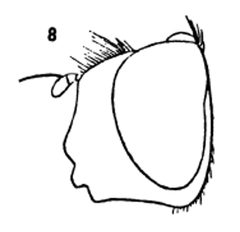
Members of Platycheirus are distinguished from other hoverfly by their elongated, slender legs and characteristic wing venation with reduced alula. -level identification within Platycheirus requires examination of male genitalia and subtle abdominal patterning. P. stegnus specifically may be recognized by punctate abdominal markings, though confirmation typically requires keys.
Images
Distribution
North America; described by American entomologist Thomas Say based on specimens from the United States.
Behavior
have been observed visiting flowers for nectar, consistent with general syrphid . A congeneric (P. trichopus) was photographed nectaring on rock purslane (Calandrinia grandiflora) in California.
Ecological Role
likely function as during flower visitation. Larval unknown; many Platycheirus larvae are , but this has not been confirmed for P. stegnus specifically.
Similar Taxa
- Platycheirus trichopusCongeneric with similar overall ; distinguished by subtle differences in abdominal patterning and male genitalia structure.
- Other Platycheirus species members share elongated legs and wing characteristics; separation requires detailed morphological examination.
- Melanostoma and PlatycheirusThese were historically confused; Platycheirus is distinguished by leg proportions and wing venation details.
More Details
Nomenclature
The specific epithet 'stegnus' is of Greek origin, meaning 'covered' or 'roofed', possibly referring to a morphological feature of the original .