
Melanostoma mellinum
(Linnaeus, 1758)
Variable Duskyface Fly
Melanostoma mellinum is a widespread and abundant hoverfly native to the Palearctic region, with introduced in North America. It is one of the most commonly recorded syrphid flies in Britain and Europe, frequently encountered in agricultural landscapes including vineyards, grasslands, and wetlands. The species has been studied for its response to landscape structure, showing increased abundance in areas with greater proportions of seminatural .
Pronunciation
How to pronounce Melanostoma mellinum: /mɛˈlænoʊˌstɒmə ˈmɛlɪnəm/
These audio files are automatically generated. While they are not always 100% accurate, they are a good starting point.
Identification
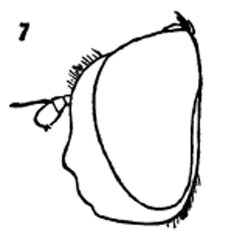
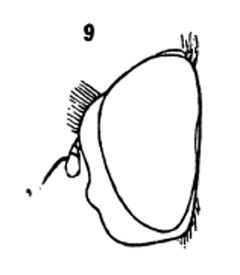
Small to medium-sized hoverfly with a slender body. Males have (eyes meeting at the top of the ), while females have dichoptic eyes (eyes separated). The is distinctly dusky or darkened, giving rise to the 'Variable Duskyface Fly.' Wing venation includes a characteristic spurious (vena spuria) typical of Syrphidae. The is usually black with yellow markings, though pattern varies individually and geographically. Distinguished from similar Melanostoma by the darkened face and specific abdominal pattern; M. scalare has a more elongate body and different facial coloration.
Images
Habitat
Found in diverse open including grasslands, meadows, wetlands, and agricultural areas. In Europe, common in vineyard agroecosystems where abundance increases with proximity to seminatural habitats and other crops at landscape up to 2000 m. Occurs in both natural and anthropogenic landscapes, from coastal areas to montane regions.
Distribution
Native to the Palearctic region: widespread across Britain, Europe including the Mediterranean basin, North Africa, and East Palearctic (Russia, China, Japan). Introduced to North America. Recorded in Portugal, where landscape-level studies confirm presence in vineyard systems.
Seasonality
active from spring through autumn in temperate regions; peak abundance typically in summer months. Multiple per year in favorable climates.
Diet
feed on nectar and pollen from diverse flowering plants. Larvae are predatory, feeding on aphids and other small Hemiptera.
Life Cycle
Holometabolous development with , larva, pupa, and stages. Larvae develop in ground layer vegetation where they prey on colonies. occurs in the soil or leaf litter. Multiple per year; stage not definitively established for all but likely as pupae or adults in sheltered locations.
Behavior
are agile fliers, often observed hovering near vegetation or visiting flowers. Shows strong positive response to landscape complexity, with abundance increasing in vineyard systems surrounded by seminatural at distances up to 2000 m. Adults likely disperse across agricultural matrices to exploit ephemeral for larval development.
Ecological Role
Important agent: larvae are significant of pests in agricultural systems. contribute to pollination through nectar and pollen feeding. Part of the syrphid providing services including pest regulation in vineyards and other crops.
Human Relevance
Beneficial insect in , particularly in vineyard and orchard systems. Presence indicates landscape- quality and potential for natural control. Not a pest or nuisance .
Similar Taxa
- Melanostoma scalareSimilar size and coloration, but M. scalare has a more elongate body, longer , and pale rather than the darkened face of M. mellinum.
- Platycheirus speciesSmall hoverflies with similar use, but Platycheirus have distinctive flattened or modified forelegs in males and different wing venation patterns.