
Brachyopa notata
Osten Sacken, 1875
Black-banded Sapeater
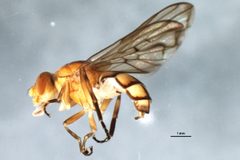
Brachyopa notata is a rare of syrphid fly (hoverfly) found in northeastern North America. are flower-visiting insects that obtain nectar and pollen from flowers. The species is poorly documented, with only 25 observations recorded on iNaturalist. Larval development remains undescribed for this species, though related members of the Brachyopa possess rat-tailed larvae adapted to aquatic or semi-aquatic environments.
Pronunciation
How to pronounce Brachyopa notata: /bræˈkiːoʊpə noʊˈteɪtə/
These audio files are automatically generated. While they are not always 100% accurate, they are a good starting point.
Identification
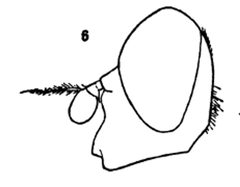
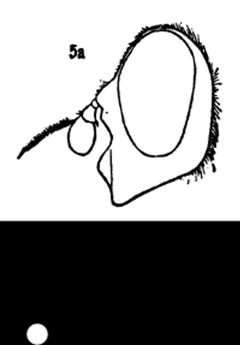
As a member of the Brachyopa, this likely exhibits the characteristic features of sapeater hoverflies: a broad, somewhat flattened body and distinctive wing venation. Specific identification features for B. notata are not documented in available sources. The "Black-banded Sapeater" suggests dark transverse bands on the , but this requires verification.
Images
Distribution
Northeastern North America, including Canada and the United States. Specific regional records are sparse due to the ' rarity.
Diet
feed on nectar and pollen from flowers. Larval diet is unknown for this .
Life Cycle
Larvae of the Brachyopa are of the rat-tailed type, possessing a telescoping respiratory siphon that allows breathing while submerged in liquid substrates. However, larvae of B. notata specifically have not been described.
Behavior
have been observed visiting flowers. Like other hoverflies, they are capable of sustained hovering . No other behavioral details are documented for this .
Ecological Role
may contribute to pollination through flower visitation. Potential larval ecological roles are unknown.
More Details
Data Deficiency
This is considered rare with minimal observational records. Most biological details—including larval , complete distribution, and seasonal activity—remain undocumented.