
Borboropsis
Czerny, 1902
Species Guides
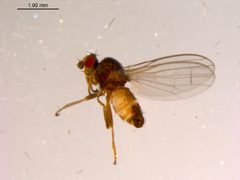
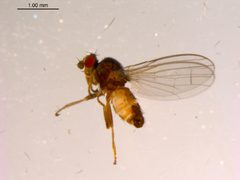
1Borboropsis is a of small flies in the Heleomyzidae, established by Czerny in 1902. The genus contains at least four described distributed across Europe and East Asia. Species in this genus are part of a family commonly associated with decaying organic matter and shaded, moist .
Pronunciation
How to pronounce Borboropsis: /bɔrˈbɔrɔpsɪs/
These audio files are automatically generated. While they are not always 100% accurate, they are a good starting point.
Identification
Members of Borboropsis can be distinguished from other Heleomyzidae by subtle morphological features of the and , though specific diagnostic characters require examination of . The genus lacks the pronounced bristle patterns seen in some related heleomyzid genera.
Images
Habitat
Based on -level associations, in this likely inhabit shaded, moist environments with abundant decaying plant matter. Heleomyzidae are frequently found in woodland settings, compost, and similar organic substrates.
Distribution
Documented from northern Europe (Sweden, Norway) and East Asia (Japan). Records exist for Norway and Sweden based on GBIF data.
Ecological Role
As members of Heleomyzidae, in this likely contribute to decomposition processes in their . The is generally considered saprophagous, with larvae developing in decaying organic material.
Similar Taxa
- HeleomyzaBoth belong to Heleomyzidae and share similar body plans; Borboropsis are generally smaller with reduced bristling compared to Heleomyza.
- SuilliaSuillia often have more vivid coloration and are strongly associated with fungi, whereas Borboropsis species appear more uniformly colored and less specialized in .
More Details
Species diversity
Four are currently recognized: B. fulviceps (Strobl, 1898) from Europe, B. puberula (Zetterstedt, 1838) from Europe, B. steyskali (Mathis, 1973), and B. yakunoana Sasakawa, 2004 from Japan. The latter two species were described in the 20th and 21st centuries, suggesting the remains understudied.