
Suillia
Robineau-Desvoidy, 1830
truffle flies
Species Guides
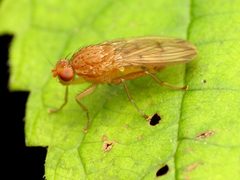
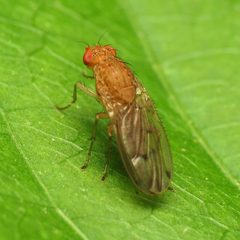
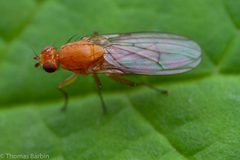
9Suillia is a of flies in the Heleomyzidae containing at least 130 described . Species are strongly associated with fungal fruiting bodies, particularly hypogeous fungi in the genus Tuber. Larval development occurs inside fungal tissues, making some species economically significant pests of truffle crops. Males of at least one species exhibit territorial on mushroom basidiocarps.
Pronunciation
How to pronounce Suillia: /ˈswɪl.i.ə/
These audio files are automatically generated. While they are not always 100% accurate, they are a good starting point.
Images
Habitat
Fruiting bodies of fungi, particularly hypogeous (below-ground) fungi such as Tuber and above-ground basidiocarps of mushrooms including Hebeloma radicosum. Larval development occurs within fungal tissues.
Distribution
Europe (including Poland, Denmark, Norway, Sweden); Asia (central Japan); North America (Vermont, United States).
Diet
Larvae develop inside and feed on fungal fruiting bodies. Specific dietary details for are not documented.
Host Associations
- Tuber aestivum - larval development inside fruiting bodiesBurgundy truffle; confirmed for S. gigantea
- Tuber - larval development inside fruiting bodies of hypogeous fungi; primary group for S. gigantea
- Hebeloma radicosum - mating territory and likely oviposition sitebasidiocarps used as territorial mating sites by males; central Japan
Life Cycle
Larvae develop inside fungal fruiting bodies. emerge from pupae within fungal tissues. Specific details of , pupal stages, and adult lifespan are not documented for the .
Behavior
Males of at least one exhibit territorial on mushroom basidiocarps, defending territories against intruding males and intercepting females arriving to oviposit.
Ecological Role
Fungivorous flies with larval development in fungal fruiting bodies. Some are significant pests of cultivated truffle crops, causing damage that leads to production losses.
Human Relevance
Some , particularly Suillia gigantea, are economically important pests of truffle production in Europe. Larval feeding inside truffle fruiting bodies causes damage leading to crop losses, generating interest in developing control methods for the truffle industry. The of S. variegata has been sequenced.
More Details
Genomic Resources
The of Suillia variegata (Loew, 1862) has been sequenced and published (PMCID: PMC11319907).
Molecular Identification
sequences for S. gigantea were first isolated in 2020, enabling molecular identification of this truffle-associated .
Sources and further reading
- BugGuide
- Wikipedia
- GBIF taxonomy match
- iNaturalist taxon
- NCBI Taxonomy
- Catalogue of Life
- First molecular identification of Suillia gigantea (Meigen, 1830) (Diptera: Heleomyzidae)
- Territorial behaviour of Suillia males on basidiocarps of Hebeloma radicosum in central Japan
- Territorial behaviour of Suillia males on basidiocarps of Hebeloma radicosum in central Japan
- To the biology of Suillia flavifrons (Zetterstedt, 1838) (Diptera: Heleomyzidae) with a description of the immature stages
- The genome sequence of a heleomyzid fly, Suillia variegata (Loew, 1862).