
Heleomyza
Fallén, 1810
Species Guides
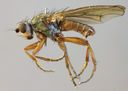
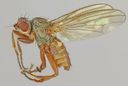
2Heleomyza is a of flies in the Heleomyzidae, established by Fallén in 1810. Members are small-bodied flies, with some exhibiting remarkable physiological adaptations to cold environments. The genus has a Holarctic distribution, with records from Europe, Asia, and North America. At least one species, Heleomyza borealis, has been extensively studied for its extreme freeze .
Pronunciation
How to pronounce Heleomyza: /ˌhɛliˈɒmɪzə/
These audio files are automatically generated. While they are not always 100% accurate, they are a good starting point.
Images
Habitat
Arctic and northern temperate . Heleomyza borealis larvae overwinter in substrates where winter temperatures may fall below −15°C.
Distribution
Holarctic: recorded from Spain, Iceland, Ireland, Great Britain, France, Belgium, the Netherlands, Germany, Denmark, Norway, Sweden, Finland, Switzerland, Austria, Poland, the Czech Republic, Slovakia, Ukraine, Romania, Bulgaria, Russia (including the northern Caucasus and Siberia), Kazakhstan, and North America.
Life Cycle
Larvae are the stage. In Heleomyza borealis, larvae become upon reaching approximately 7.5 mg body mass, remaining in this state until experiencing a low temperature stimulus (< −15°C) followed by warming to ≈5°C, which triggers and ensures in early summer.
Behavior
Heleomyza borealis larvae exhibit extreme freeze , surviving temperatures down to −60°C. They maintain low metabolic rates and can conserve body water at subzero temperatures without synthesizing large quantities of cryoprotectants. Fructose levels increase from 6.1 to 17 μg mg⁻¹ fw during cold acclimation.
More Details
Cold tolerance mechanism
Unlike many freeze-tolerant insects, Heleomyza borealis does not rely on high concentrations of polyols or sugars for cryoprotection. Glycerol, sorbitol, and levels remain low during cold acclimation. Instead, survival appears linked to fructose accumulation and the ability to conserve body water and maintain low metabolic rates during prolonged dormancy.