
Phytomyza syngenesiae
(Hardy, 1849)
Chrysanthemum Leafminer, Ragwort Leaf Miner
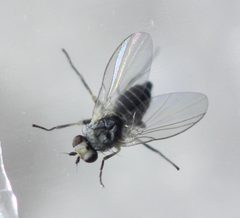
Phytomyza syngenesiae is an agromyzid leaf-mining fly found in the Palaearctic region, Australia, and New Zealand. The larvae create internal leaf mines in members of the Asteraceae , including chrysanthemums, ragwort (Senecio), and artichokes. The is recognized as an agricultural pest in greenhouse and crop settings, with significant variation in plant susceptibility among cultivars.
Pronunciation
How to pronounce Phytomyza syngenesiae: //faɪˈtɒmɪzə sɪnˈdʒɛnɪsiaɪ//
These audio files are automatically generated. While they are not always 100% accurate, they are a good starting point.
Identification
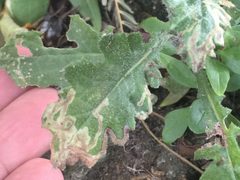
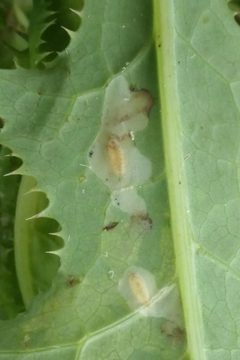
are small flies resembling houseflies in general form. Larvae create serpentine or blotch leaf mines visible as pale trails on leaf surfaces. Mines can be distinguished from other agromyzid miners by plant association and mine pattern, though definitive identification requires examination of adult .
Images
Habitat
Agricultural and horticultural settings including greenhouses, nurseries, and field crops. Associated with cultivated Asteraceae such as chrysanthemums and artichokes, as well as wild Senecio .
Distribution
Palaearctic region; present in Australia and New Zealand. Recorded in Denmark (DK) with confirmed presence.
Diet
Larvae feed internally on leaf mesophyll tissue of Asteraceae , creating mines between upper and lower leaf . Larval feeding damage varies significantly among host cultivars.
Host Associations
- Chrysanthemum spp. - larval Eighteen cultivars tested; susceptibility varies significantly. Cv. Mary Poppins highly susceptible; cv. Thumbelina least susceptible to leaf damage.
- Senecio spp. - larval Wild plants; referred to as 'ragwort ' in this context.
- Artichoke (Cynara cardunculus var. scolymus) - larval Agricultural pest in artichoke crops.
Behavior
Larvae are leaf miners, feeding internally within leaf tissue. Susceptibility to leaf mining damage varies among cultivars, suggesting potential host selection or plant resistance interactions.
Ecological Role
Agricultural pest in chrysanthemum and artichoke production. Subject to by .
Human Relevance
Economic pest of ornamental chrysanthemums and artichoke crops. applications (methyl and ethyl parathion) have been studied for effects on controlling the , with noted impacts on associated .
Similar Taxa
- Phytomyza ilicicolaBoth are agromyzid leaf miners, but P. ilicicola is restricted to American holly (Ilex opaca) in eastern North America, whereas P. syngenesiae occurs on Asteraceae in the Palaearctic and Australasia.
- Other Phytomyza and Chromatomyia speciesMany create similar leaf mines; plant association is critical for field identification. P. syngenesiae is distinguished by association with Asteraceae (chrysanthemums, ragwort, artichokes).
More Details
Taxonomic Note
The is also known by the synonym Chromatomyia syngenesiae. Some taxonomic treatments place this species in Chromatomyia rather than Phytomyza, reflecting ongoing classification debates within Agromyzidae.
Sources and further reading
- BugGuide
- GBIF taxonomy match
- iNaturalist taxon
- NCBI Taxonomy
- Catalogue of Life
- The Holly and Ivy - A two part series: This week the holly and the native holly leaf miner, Phytomyza ilicicola — Bug of the Week
- Deck the halls with boughs of holly…and the Native holly leafminer, 'Phytomyza ilicicola', and Holly berry midge, 'Asphondylia ilicicola' — Bug of the Week
- Holly surprise: Native holly leafminer, Phytomyza ilicicola — Bug of the Week
- Holiday miners - Native holly leafminer, Phytomyza ilicicola — Bug of the Week
- Deck the halls with boughs of holly - and maybe some leaves with the native holly leafminer, Phytomyza ilicicola — Bug of the Week
- The Holly and Ivy: A two part series - This week the holly and holly leaf miner - Phytomyza ilicicola — Bug of the Week
- Influence of Methyl and Ethyl Parathion on Parasitoids of Phytomyza syngenesiae (Diptera: Agromyzidae) in Artichokes
- The Susceptibility of Eighteen Chrysanthemum Cultivars to the Chrysanthemum Leaf Miner, Phytomyza syngenesiae (Hardy)