
Phytomyza palustris
Eiseman & Lonsdale, 2018
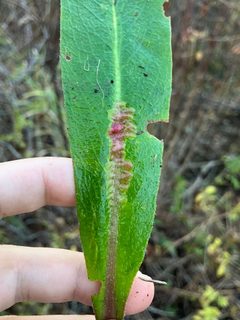
Phytomyza palustris is a of leaf-mining fly in the Agromyzidae, described by Eiseman and Lonsdale in 2018. Like other members of the Phytomyza, its larvae feed internally within leaves, creating distinctive tunnels or mines between the upper and lower leaf surfaces. The species epithet 'palustris' suggests an association with marshy or wetland . Very few observations of this species have been recorded, indicating it may be rare, recently described, or poorly surveyed.
Pronunciation
How to pronounce Phytomyza palustris: //faɪtoʊˈmaɪzə pəˈlʌstrɪs//
These audio files are automatically generated. While they are not always 100% accurate, they are a good starting point.
Identification
Phytomyza palustris can only be reliably distinguished from other Phytomyza by examination of morphological characters, particularly male genitalia. The leaf mines may appear similar to those of other Phytomyza species. Identification to species level requires expert taxonomic analysis.
Images
Habitat
The epithet 'palustris' (meaning 'of marshes') suggests association with wetland or marshy environments. plant associations have not been documented in available sources.
Distribution
Known from very few records. The was described in 2018, suggesting a North American distribution based on the authors' geographic focus, but precise range data is unavailable.
Seasonality
timing is unknown. Related Phytomyza typically have adult activity periods synchronized with plant leaf flush in spring.
Life Cycle
Specific details are undocumented. Based on related in Phytomyza, the life cycle likely involves: females using an ovipositor to pierce leaves and deposit ; larval development through leaf mining; within the mine or in soil; and adult timed to coincide with new growth.
Behavior
females use their sharp ovipositor to puncture leaf surfaces for both -laying and feeding on exuded sap. Larvae feed internally within leaves, creating expanding mines as they grow.
Ecological Role
As a , larvae may cause localized damage to plant foliage. The ecological impact is likely minor given the specialized nature of the interaction and limited sizes typical of such insects.
Human Relevance
No documented economic or agricultural significance. Not known to be a pest of cultivated plants.
Similar Taxa
- Phytomyza ilicicolaAnother North American Phytomyza that creates serpentine leaf mines; differs in association with American holly (Ilex opaca) and was described over a century earlier (1893 vs. 2018)
- Phytomyza gymnostomaAllium leafminer with similar leaf-mining larval ; differs in being a European native to North America with documented agricultural pest status on allium crops
More Details
Sources and further reading
- BugGuide
- GBIF taxonomy match
- iNaturalist taxon
- Catalogue of Life
- The Holly and Ivy - A two part series: This week the holly and the native holly leaf miner, Phytomyza ilicicola — Bug of the Week
- Deck the halls with boughs of holly…and the Native holly leafminer, 'Phytomyza ilicicola', and Holly berry midge, 'Asphondylia ilicicola' — Bug of the Week
- Gall darn it! Gall insects on hickory, oak, and elm, Phylloxera caryaecaulis, Andricus palustris, Colopha ulmicola — Bug of the Week
- Invasive Fly Targets North American Onions, Leeks, Related Crops
- Braconidae | Beetles In The Bush
- Archive — Bug of the Week