Phytomyza aquilegivora
Spencer, 1969
columbine leafminer
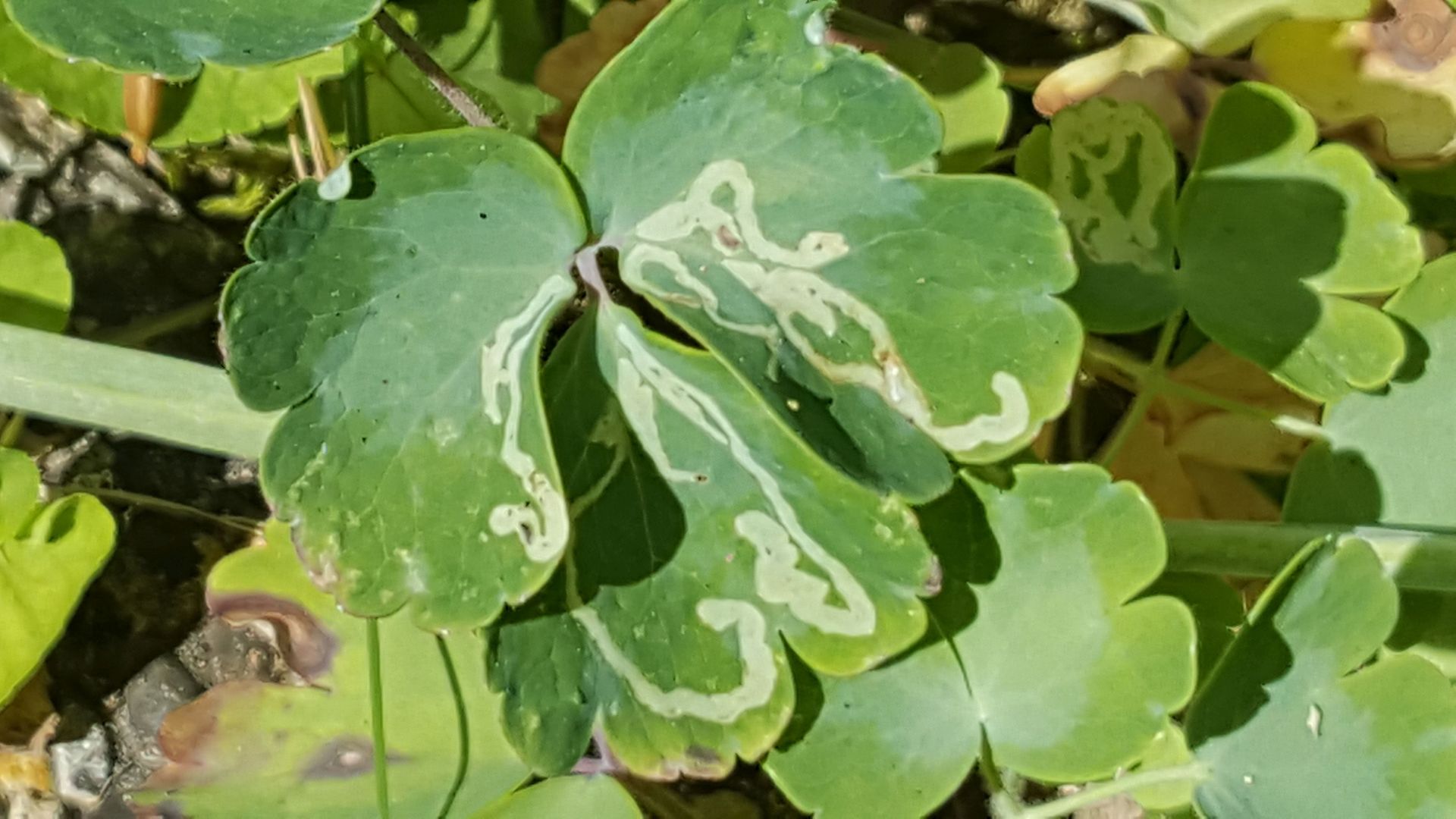
Phytomyza aquilegivora is a leaf-mining fly in the Agromyzidae that specializes on columbine (Aquilegia spp.). Larvae feed within leaves, creating serpentine mines that expand as they grow. levels vary significantly by and cultivar, with some selections showing moderate resistance. The species is subject to by hymenopteran .
Pronunciation
How to pronounce Phytomyza aquilegivora: //faɪtoʊˈmɪzə ˌækwɪliˈdʒɪvərə//
These audio files are automatically generated. While they are not always 100% accurate, they are a good starting point.
Identification
are small flies in the Agromyzidae; specific diagnostic features distinguishing P. aquilegivora from other Phytomyza are not documented in available sources. Larval mines appear as serpentine trails on columbine leaves. Presence on Aquilegia plants separates it from the related holly leafminer Phytomyza ilicicola.
Images
Habitat
Gardens and landscapes planted with columbine (Aquilegia spp.); occurs in both irrigated and non-irrigated settings. Field studies have documented in wooded sites and open cultivated areas.
Distribution
United States and Canada. Specific records include Vermont and Georgia; distribution corresponds to the range of cultivated and native columbine .
Diet
Larval stage feeds on leaf tissue of columbine (Aquilegia spp.), creating internal mines. have been observed to feed on plant sap from feeding punctures made by the ovipositor, though this is inferred from related Phytomyza and not directly documented for P. aquilegivora.
Host Associations
- Aquilegia canadensis - Native showing moderate resistance in non-irrigated sites
- Aquilegia flabellata - Comparable resistance to A. canadensis in non-irrigated sites
- Aquilegia caerulea 'Dwarf Fantasy Mix' - Moderate resistance in non-irrigated sites
- Aquilegia alpina - Heavily attacked across all sites
- Aquilegia chrysantha 'Yellow Star' - Heavily attacked; highest rates of any cultivar studied
- Aquilegia caerulea - Heavily attacked
- Aquilegia caerulea 'McKana mix' - Heavily attacked
- Aquilegia caerulea 'Music hybrid' - Heavily attacked
- Aquilegia skinneri - Heavily attacked
- Aquilegia x hybrida 'Ruby Port' - Heavily attacked
- Aquilegia vervaeneana 'Woodside' - Intermediate levels
- Aquilegia vulgaris 'Winkie Blue & White' - Intermediate levels
Life Cycle
Complete with , larval, pupal, and stages. Larvae develop within leaf mines, feeding between upper and lower leaf surfaces. likely occurs within the mine or in soil, based on related Phytomyza , but specific details are not documented.
Behavior
Females use an ovipositor to pierce leaf surfaces and deposit into soft leaf tissue. Larvae create expanding serpentine mines as they feed and grow. levels are influenced by cultivar and irrigation status, with all cultivars equally infested in irrigated sites but variable resistance in non-irrigated conditions.
Ecological Role
Herbivore specializing on columbine; serves as for hymenopteran including Chrysocharis pentheus (most abundant in central Georgia) and Seladerma sp. (only parasitoid recovered in north Georgia). Eleven parasitoid from three have been documented.
Human Relevance
Pest of ornamental columbine in gardens and landscapes. Some cultivars show moderate resistance, offering potential for . by native may reduce pressure.
Similar Taxa
- Phytomyza ilicicolaNative holly leafminer; similar serpentine mining and , but restricted to Ilex (holly) rather than Aquilegia
- Pristiphora rufipesColumbine sawfly; also feeds on columbine but is a hymenopteran with larval stages that consume leaf tissue externally rather than mining internally, and have two pairs of wings versus one pair in Diptera
More Details
Host resistance patterns
Field trials in Georgia demonstrated that irrigation status significantly affects expression of resistance. In non-irrigated wooded sites, certain cultivars and native showed moderate resistance, while in irrigated sites all tested cultivars were equally susceptible.
Parasitoid community variation
composition differed geographically: Chrysocharis pentheus dominated in central Georgia (41% of all parasitoids, 48.4% of reared), while Seladerma sp. was the only parasitoid recovered in north Georgia (22.1% of all parasitoids).
Sources and further reading
- BugGuide
- Wikipedia
- GBIF taxonomy match
- iNaturalist taxon
- NCBI Taxonomy
- Catalogue of Life
- The Holly and Ivy - A two part series: This week the holly and the native holly leaf miner, Phytomyza ilicicola — Bug of the Week
- Deck the halls with boughs of holly…and the Native holly leafminer, 'Phytomyza ilicicola', and Holly berry midge, 'Asphondylia ilicicola' — Bug of the Week
- Holly surprise: Native holly leafminer, Phytomyza ilicicola — Bug of the Week
- Holiday miners - Native holly leafminer, Phytomyza ilicicola — Bug of the Week
- Deck the halls with boughs of holly - and maybe some leaves with the native holly leafminer, Phytomyza ilicicola — Bug of the Week
- Vanquished vanishing columbines: Columbine sawfly, Pristiphora rufipes — Bug of the Week
- Species and Cultivar Influences on Infestation by and Parasitism of a Columbine Leafminer (Phytomyza aquilegivora Spencer)