
Liriomyza eupatorii
(Kaltenbach, 1874)
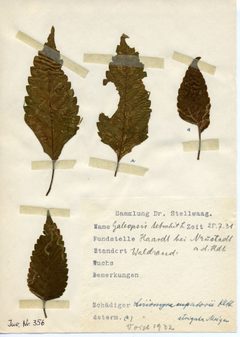
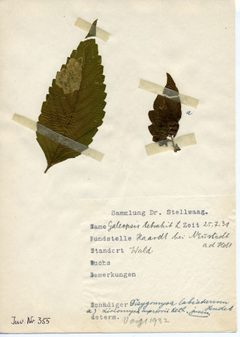
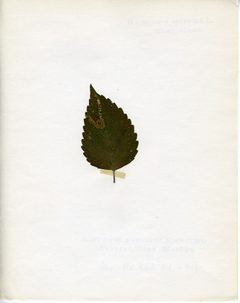
Liriomyza eupatorii is a leafminer fly in the Agromyzidae, described by Johann Heinrich Kaltenbach in 1874. The occurs in Europe and is known for its larvae creating mines in leaves of plants in the Asteraceae and Lamiaceae families. plants include hemp-agrimony (Eupatorium cannabinum), various hemp-nettles (Galeopsis species), sunflowers (Helianthus), and European goldenrod (Solidago virgaurea), among others.
Pronunciation
How to pronounce Liriomyza eupatorii: /ˌlɪriˈɒmɪzə juːˌpætɔːˈraɪiː/
These audio files are automatically generated. While they are not always 100% accurate, they are a good starting point.
Images
Distribution
Europe; specifically recorded from Belgium (including Brussels-Capital, Flemish, and Walloon regions) and Denmark.
Diet
Larvae feed internally on leaf tissue, mining leaves of plants in Asteraceae and Lamiaceae. Documented hosts include Aster , Ageratina aromatica, Eupatorium cannabinum, Galeopsis species (G. ladanum var. angustifolia, G. pubescens, G. segetum, G. speciosa, G. tetrahit), Helianthus species, Lapsana communis, and Solidago virgaurea.
Host Associations
- Aster - larval plant
- Ageratina aromatica - larval plantlesser snakeroot
- Eupatorium cannabinum - larval planthemp-agrimony
- Galeopsis ladanum var. angustifolia - larval plantred hemp-nettle
- Galeopsis pubescens - larval planthairy hemp-nettle
- Galeopsis segetum - larval plantdowny hemp-nettle
- Galeopsis speciosa - larval plantlarge-flowered hemp-nettle
- Galeopsis tetrahit - larval plantcommon hemp-nettle
- Helianthus - larval plantsunflowers
- Lapsana communis - larval plantcommon nipplewort
- Solidago virgaurea - larval plantEuropean goldenrod
Sources and further reading
- BugGuide
- Wikipedia
- GBIF taxonomy match
- iNaturalist taxon
- NCBI Taxonomy
- Catalogue of Life
- Liriomyza miserabilis Lonsdale dorsal | Entomology Research Museum
- Primary Type List | Entomology Research Museum
- Publications | Entomology Research Museum
- Liriomyza huidobrensis Archives - Entomology Today
- Predicting Shifts in the Range of Invasive Insect Species in the Face of Climate Change
- A Case for Preservation: Maintaining Insect Collections in Developing Countries