
Aulagromyza cornigera
(Griffiths, 1973)
Aulagromyza cornigera is a leaf-mining fly in the Agromyzidae. Its larvae create distinctive linear mines on leaves of honeysuckle family plants, particularly Lonicera and Symphoricarpos. The is , with larval activity occurring from late March through early June. It has a transatlantic distribution, occurring across Europe and in North America.
Pronunciation
How to pronounce Aulagromyza cornigera: //ˌɔːləˈɡrɒmɪzə kɔːˈnɪdʒərə//
These audio files are automatically generated. While they are not always 100% accurate, they are a good starting point.
Identification
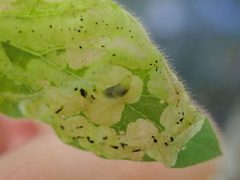
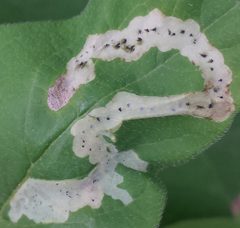
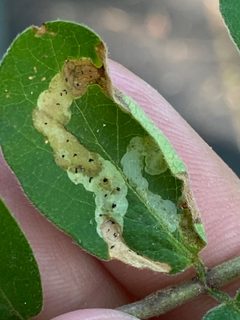
Distinguished from other Agromyzidae by the characteristic linear mine pattern with black alternating lumps on upper leaf surfaces of honeysuckle . Mines potentially attributable to this have been noted on Triosteum perfoliatum, though confirmation of this host association requires further study.
Images
Habitat
Associated with supporting plants in the honeysuckle (Caprifoliaceae), including Lonicera and Symphoricarpos .
Distribution
Native to Europe, with records from Norway eastward to the Volga District of Russia. Introduced or native to North America, with confirmed presence in the United States (including Vermont) and southern Canada. GBIF records indicate presence in Denmark and Norway, with doubtful records from Sweden.
Seasonality
. Larvae present from late March through early June. period not explicitly documented in available sources.
Diet
Larval stage feeds internally on leaf tissue of Lonicera (honeysuckle) and Symphoricarpos , creating mines between leaf surfaces.
Host Associations
- Lonicera - larval within Caprifoliaceae
- Symphoricarpos - larval within Caprifoliaceae
- Triosteum perfoliatum - potential larval mines tentatively attributed to this
Life Cycle
. Larval development occurs within leaf mines from late March to early June. Details of deposition, , and not documented in available sources.
Behavior
Larvae feed as leaf miners, creating linear galleries within leaf mesophyll. No other documented.
Ecological Role
Herbivore; leaf-mining activity may contribute to nutrient cycling through accelerated leaf , though specific impacts not quantified.
Similar Taxa
- Other Aulagromyza speciesShare leaf-mining habit on Caprifoliaceae; distinguished by mine and pattern
- Other Agromyzidae on LoniceraMay create similar mines; specific identification requires examination of larval or characters
More Details
Taxonomic note
described by Griffiths in 1973. The specific epithet 'cornigera' is shared with Acacia cornigera, a Central American tree with which this fly has no biological relationship; this reflects independent naming rather than ecological association.