
Xanthomelanodes
Townsend, 1893
Species Guides
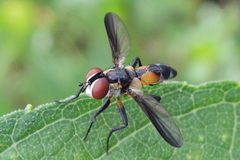
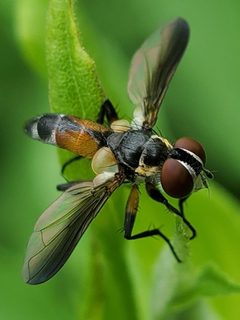
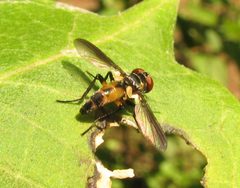
4Xanthomelanodes is a of tachinid flies comprising 13 described . As members of the Phasiinae and tribe Gymnosomatini, these flies are endoparasitoids of true bugs (Hemiptera: Heteroptera). Larvae develop inside their and kill them. The genus was erected by Townsend in 1893 as a replacement name for Xanthomelana Wulp, 1892, which was already in use.
Pronunciation
How to pronounce Xanthomelanodes: //zænˌθoʊmɛləˈnoʊdiːz//
These audio files are automatically generated. While they are not always 100% accurate, they are a good starting point.
Identification
Distinguished from other Phasiinae by placement in tribe Gymnosomatini, which specializes on heteropteran . Specific -level diagnostic features are not documented in available sources.
Images
Distribution
occur across the Americas, with records from the United States to Brazil. Specific distribution records include: X. californicus from California; X. brasiliensis from Brazil (Nova Friburgo); and multiple species with broader Nearctic and Neotropical ranges.
Host Associations
- Heniartes jaakkoi - female parasitized by Xanthomelanodes cf. brasiliensis; first confirmed record for Reduviidae in Neotropical region. Tribe Gymnosomatini specializes on Heteroptera, particularly true bugs.
Life Cycle
Endoparasitoid development: larvae develop internally within heteropteran , eventually killing the host. Specific details on deposition, larval instars, sites, and time are not documented.
Behavior
females oviposit on or near heteropteran . Larvae are endoparasitoids that consume host tissues from within.
Ecological Role
agent of true bugs (Heteroptera). As , they regulate of predatory and herbivorous in their .
Similar Taxa
- Other Phasiinae generaSimilar ; distinguished by associations and tribal placement. Gymnosomatini specifically targets Heteroptera, whereas other Phasiinae tribes may use different host groups.
- Xanthomelana (synonym)Original name for type ; now synonymized under Xanthomelanodes due to preoccupation.
More Details
Taxonomic history
The type was originally described under Xanthomelana Wulp, 1892. Townsend erected Xanthomelanodes in 1893 as a replacement name because Xanthomelana was already used for a different .
Host range
While Gymnosomatini as a tribe specializes on Heteroptera, only one confirmed record exists for Xanthomelanodes at level: Heniartes jaakkoi (Reduviidae). Previous observations of Phasiinae on Harpactorinae were not identified to species.
Species diversity
Thirteen are currently recognized, with descriptions dating from 1805 (X. diaphanus as Musca diaphana) to 1955 (X. trivitatus).