
Xanthomelanodes atripennis
(Say, 1829)
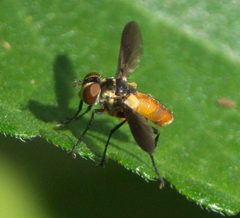
Xanthomelanodes atripennis is a of bristle fly in the Tachinidae, originally described by Thomas Say in 1829 as Phasia atripennis. The species is found in North America, with documented records from the United States and Mexico. As a member of the Phasiinae and tribe Trichopodini, it belongs to a group of tachinid flies that are primarily . The Xanthomelanodes is characterized by distinctive morphological features typical of this tribe.
Pronunciation
How to pronounce Xanthomelanodes atripennis: //zænˌθoʊməˈlænoʊdiːz ˌætrɪˈpɛnɪs//
These audio files are automatically generated. While they are not always 100% accurate, they are a good starting point.
Images
Distribution
United States and Mexico. GBIF records confirm presence in North America. iNaturalist documents 34 observations, indicating established across this range.
Ecological Role
As a tachinid fly in the Phasiinae, it is likely a , though specific records for this are not documented in the provided sources.
More Details
Taxonomic history
Originally described as Phasia atripennis by Thomas Say in 1829, later transferred to the Xanthomelanodes.
Classification details
Placed in Phasiinae:Trichopodini based on Catalogue of Life classification.