
Phrosinella
Robineau-Desvoidy, 1863
Species Guides
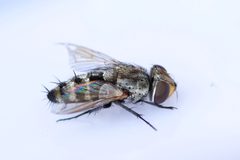
3Phrosinella is a of satellite flies in the Sarcophagidae, Miltogramminae. These flies are kleptoparasites that target the nests of solitary , particularly sand wasps in the genus Clitemnestra. The genus was established by Robineau-Desvoidy in 1863 and is currently accepted as valid. At least one , Phrosinella aurifacies, has been documented entering wasp burrows to deposit larvae on stored prey.
Pronunciation
How to pronounce Phrosinella: /froʊˈsɪnɛlə/
These audio files are automatically generated. While they are not always 100% accurate, they are a good starting point.
Images
Distribution
Distribution records exist for Norway (NO) and Sweden (SE) based on GBIF data. The has also been reported from North America, specifically in association with Clitemnestra bipunctata nests in the United States and Cuba.
Diet
Larvae feed on paralyzed prey stored in nests, including planthoppers, leafhoppers, treehoppers, and psyllids. The larvae consume the immobilized prey intended for wasp offspring.
Host Associations
- Clitemnestra bipunctata - kleptoparasite female flies enter burrows and deposit live larvae on stored prey; larvae often destroy or larvae
Life Cycle
females deposit live larvae directly into burrows. The larvae develop on paralyzed prey stored by the host wasp, completing their development without the need for the adult female to provision food.
Behavior
females actively seek out and enter excavated nests. They deposit larvae inside burrows rather than laying , a reproductive strategy that reduces time exposed to defenses.
Ecological Role
Kleptoparasite of solitary . Acts as a natural control on wasp and contributes to nutrient cycling by consuming prey that would otherwise support wasp offspring.
Similar Taxa
- Metopia argyrocephalaAlso reported as of Clitemnestra bipunctata nests; both are satellite flies in Sarcophagidae with similar kleptoparasitic
More Details
Taxonomic note
The Phrosinella belongs to the Miltogramminae, a group of Sarcophagidae specialized as kleptoparasites of solitary and bees. This distinguishes them from the more familiar flesh-feeding sarcophagids.
Reproductive biology
The deposition of live larvae (larviparity) is an to the kleptoparasitic lifestyle, allowing rapid exploitation of ephemeral food resources in nests before they are consumed by host larvae or decay.