
Ochthera anatolikos
Clausen, 1977
Ochthera anatolikos is a small predatory shore fly in the Ephydridae. and larvae are both predatory, with forelegs adapted for seizing prey. The occurs in shallow aquatic across North America, where it feeds on small insects and their larvae. It was described by Clausen in 1977.
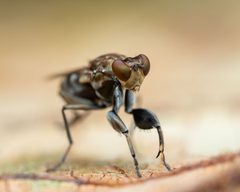
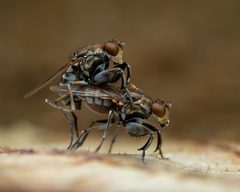
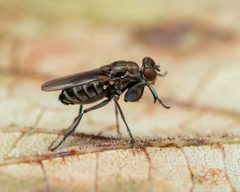
Pronunciation
How to pronounce Ochthera anatolikos: /ˈɒkθərə ænəˈtɒlɪkɔs/
These audio files are automatically generated. While they are not always 100% accurate, they are a good starting point.
Identification
Distinguished from other small flies by the forelegs—greatly enlarged and curved tibiae adapted for seizing prey. Among the thirteen North American Ochthera , specific identification to O. anatolikos requires examination of detailed morphological characters not covered in general sources. Separated from other predatory flies with raptorial legs (such as robber flies or mantidflies) by small size (4-5 mm), aquatic association, and compact body with triangular .
Images
Habitat
Very shallow, trickling streams with algal mats and debris. run on shorelines and water surfaces in search of prey. Larvae are aquatic or semi-aquatic in shallow water and shoreline muck.
Distribution
Canada and United States. Part of the Ochthera, which is distributed across most of North America.
Seasonality
active from end of March through end of October.
Diet
prey on small insects including , mosquitoes, and leafhoppers that alight on shore or water surface; also unearth midge larvae from shoreline muck. Larvae feed on midge and mosquito larvae.
Life Cycle
Females lay singly on dead, water-logged, or partly submerged grass stems at shore or in shallows. Larvae progress through three instars, lasting 7-11 days on average. Pupal stage aquatic with breathing tubes, lasting 7-10 days. Egg to approximately 16-21 days under laboratory conditions. Both larval and pupal stages are aquatic.
Behavior
periodically stretch, reach out, flex, and wave forelegs—possibly a threat display toward conspecifics or recognition signal to avoid . Females may lash out at males during mating attempts. Males mount females from rear, gripping female's if not rebuffed; males tap sides of female's rapidly with hind feet prior to mating. Mating lasts at least five minutes in related . Adults easily overpower prey using forelegs.
Ecological Role
in shallow aquatic and shoreline . Controls of small insects, particularly and mosquitoes, in both and larval stages.
Human Relevance
Potential agent for mosquito . Subject of behavioral and ecological research due to unusual leg modifications among flies.
Similar Taxa
- Other Ochthera speciesThirteen occur in North America; require detailed morphological examination for separation
- Robber flies (Asilidae)Also have predatory habits and some have legs, but are generally larger, have different body proportions, and occupy terrestrial rather than shoreline
- Mantidflies (Mantispidae)Possess forelegs but are neuropterans with different wing venation, longer , and lack the compact, triangular-faced appearance of Ochthera
More Details
Raptorial leg function
The forelegs function as a vise-like grip: the enlarged and curved tibia close on prey, with spines and teeth on the inner femur surface anchoring the victim.
Larval feeding mechanism
Larvae coil around prey like a snake constricting a rat, then use penetrating mouthparts to feed on soft internal tissues.